

SWC Forums
Pull up a chair...let's talk fishing.

An Energy Head Fake, WSJ Editorial on 3/11/10. 🙁
President Obama used his January State of the Union speech to promise "a new generation of safe, clean nuclear power plants" and "new offshore areas for oil and gas development." Judging by its recent decisions, we'd say his Cabinet hasn't received the memo.
Congress's ban on offshore drilling expired in September 2008, and a Bush Administration plan for leasing the energy-rich Outer Continental Shelf was due to begin this year. Yet within a month of taking office, Interior Secretary Ken Salazar halted leasing by extending the public comment period by six months. When that period ended last September, Interior said it would take "several weeks" to analyze the results. It has yet to release a summary.
Newt Gingrich's American Solutions group used the Freedom of Information Act to obtain Interior emails suggesting that the public comments ran 2-to-1 in favor of drilling. Instead of acknowledging this, Mr. Salazar last week informed Congress he was scrapping the Bush plan and that leasing will not begin for at least another two years.
The Administration failed to meet a deadline last month for submitting a court-ordered analysis of the environmental impact of new leases off the Alaskan coast. And in January, Mr. Salazar rebuffed Virginia's requestâ€â€endorsed by its governor and legislatureâ€â€to allow drilling offshore. Sensing a pattern?
Onshore, meanwhile, Interior canceled oil and gas leases on 77 parcels of federal land in Utah (a handful have since been reinstated). Mr. Salazar also yanked eight parcels from a lease sale in Wyoming. Several weeks ago a leaked Interior Department memo disclosed plans to have Mr. Obama use executive powerâ€â€under the Antiquities Actâ€â€to designate 10 million acres of western land as "monuments," putting them off-limits to energy development as well as current timber or mining work.
As for nuclear power, Mr. Obama has promised an $8.3 billion loan guarantee to build two nuclear reactors in Georgia. However, Mike Morris, the CEO of American Electric Power, explained at a recent Wall Street Journal energy conference that while loan guarantees were a "nice thing," they were meaningless in the absence of regulatory certainty.
Only five of 50 states have what Mr. Morris calls nuclear-friendly "enabling" legislation that might convince corporate boards to commit capital to a long-term project. The federal Nuclear Regulatory Commission, despite adopting a streamlined licensing process in 2005, hasn't issued key rules.
The Administration also sent mixed signals last week by putting the kibosh on Yucca Mountain for nuclear waste disposal. Energy Secretary Steven Chu has convened yet another "blue ribbon" panel on nuclear waste, which will probably have the half-life of uranium. Companies are already suing the feds for failing to meet legal obligations to collect waste, and the end of Yucca is one more reason for utilities to avoid making large capital bets amid uncertain government policy.
The President says he wants new supplies of home-grown energy, but the government's actions suggest continuing hostility to oil drilling and nuclear power. GOP Senator Lindsey Graham of South Carolina has been promoting a deal in which Republicans would endorse cap and trade in return for Democrats agreeing to more oil drilling and more nuclear plants. He appears to be selling a bridge to nowhere.
Printed in The Wall Street Journal, page A16
Good article thanx for sharing
cya
Photos of the Cajun Fish Fry, were recd. early and posted on my website. This was sent by a reliable source once the fire was stabilized.
Don't believe everything you read in the newspaer or see on TV. This person is trustworthy and reliable. Here is the latest on the horrific oil spill:
FYI,
Contrary to media reports, there is no catastrophic oil spill associated with the rig explosion. The Coast Guard is now reporting that less than 200 barrels of oil was spilled (9,000 gals) and that most of that is contained or dispersed. The CG and BP both report that the shutoff valves on the well head and pipelines worked as designed and that there is no oil escaping the wellhead or pipeline. This, in direct contradiction to early media reports that 8,000 barrels per day were spilling into the Gulf. The risk of anything that is left fouling the coastline is minimal. I thought you would find this interesting.

Here are some of the pictures Captain Stanman is referring to: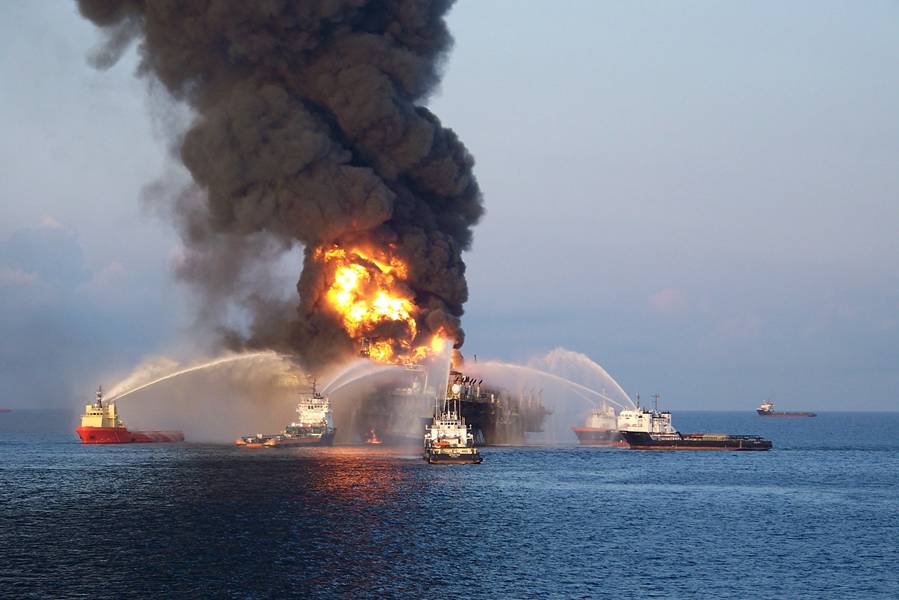
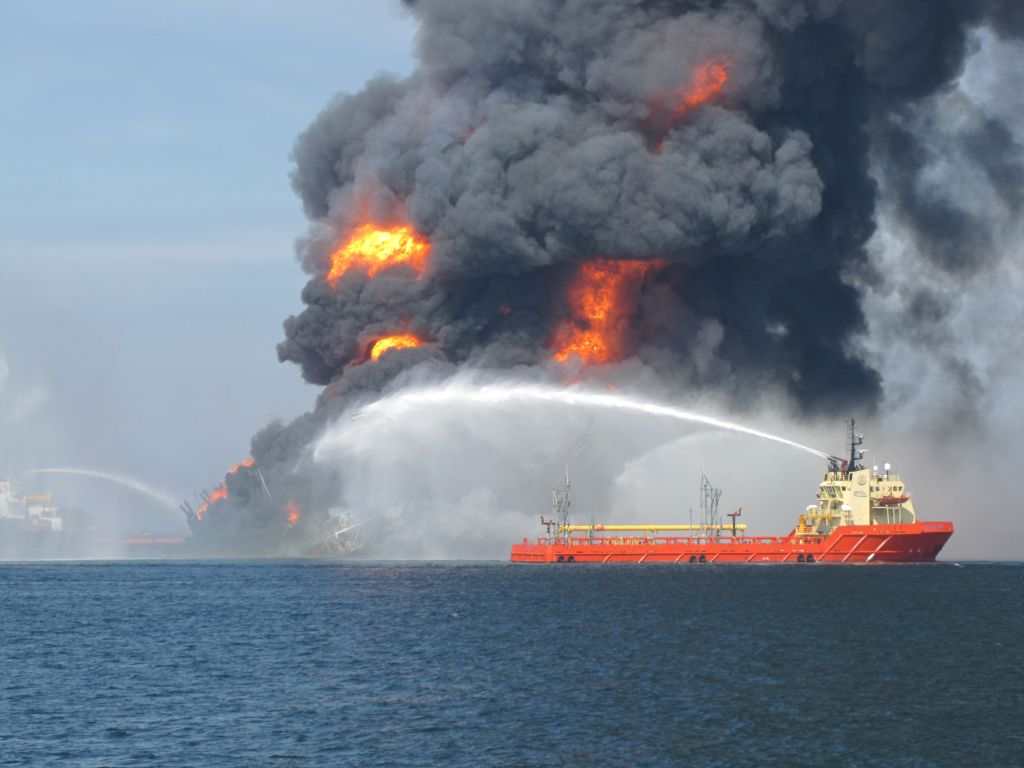
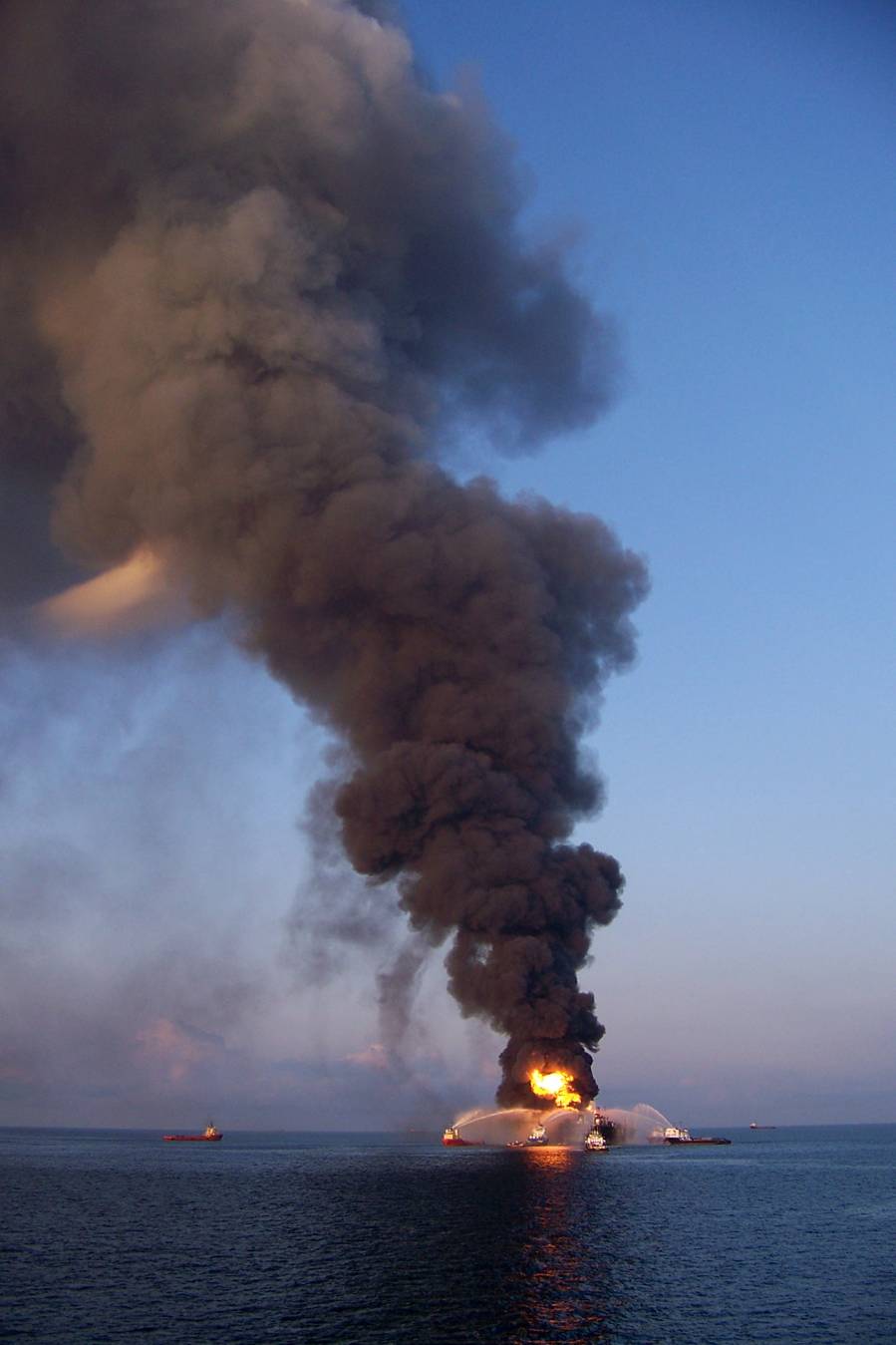
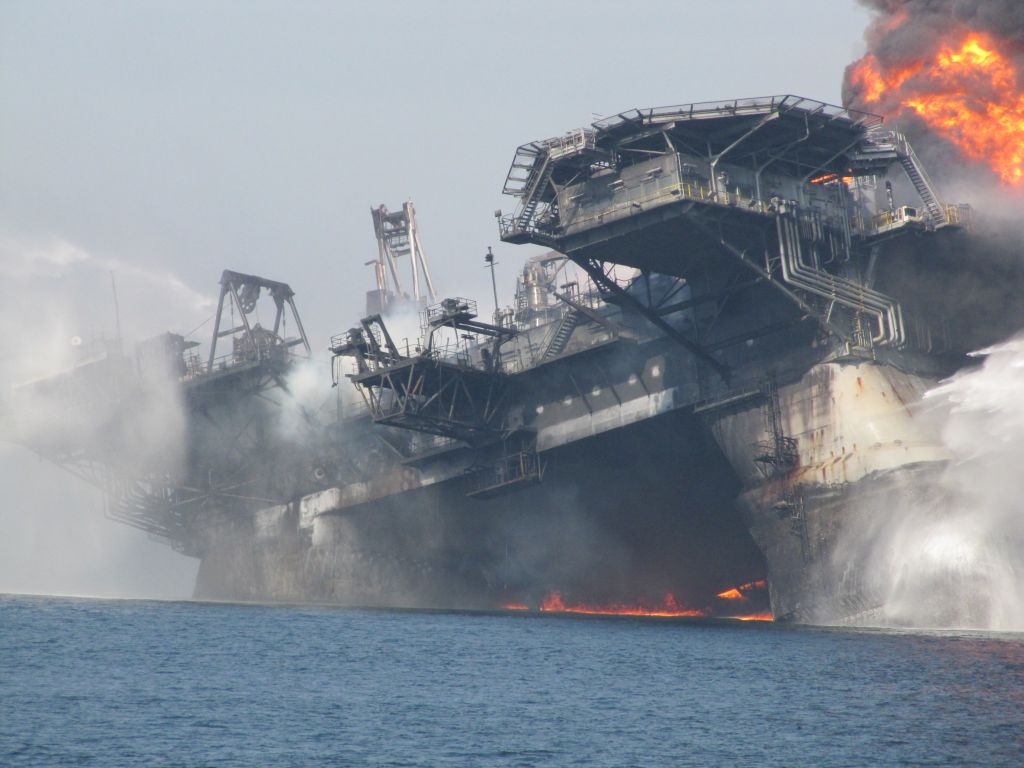
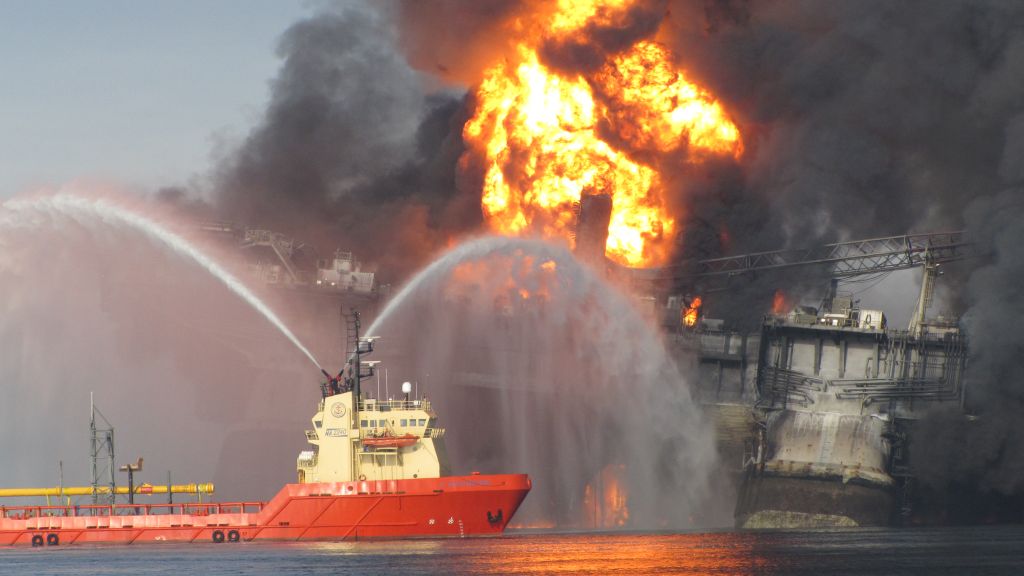
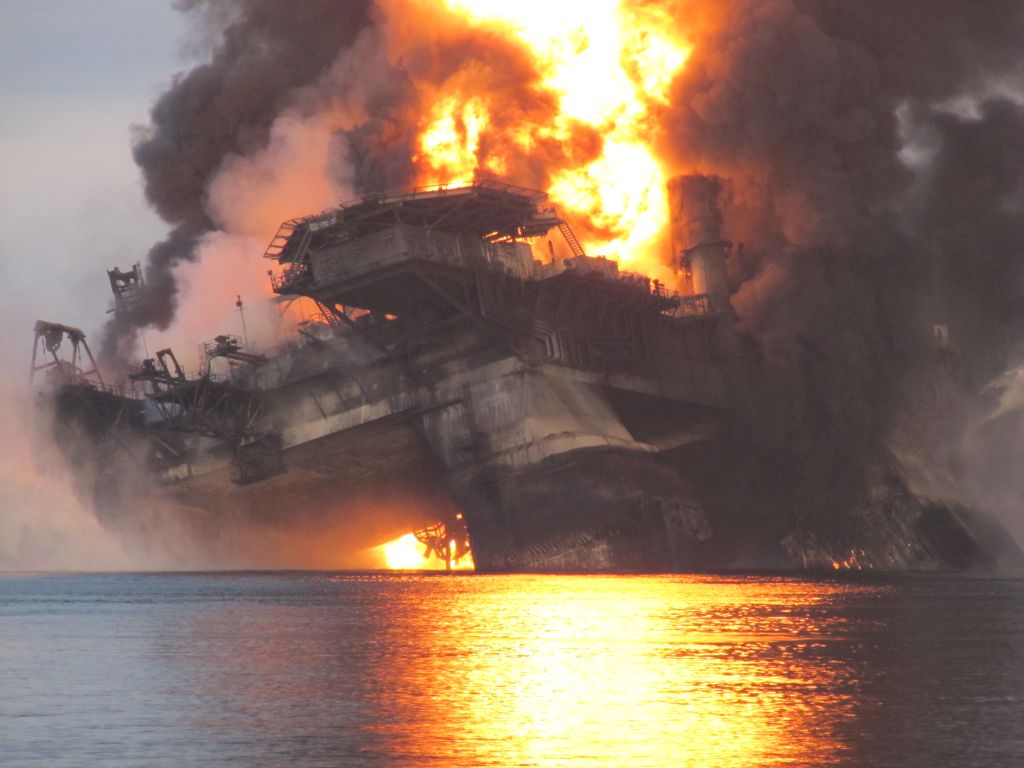
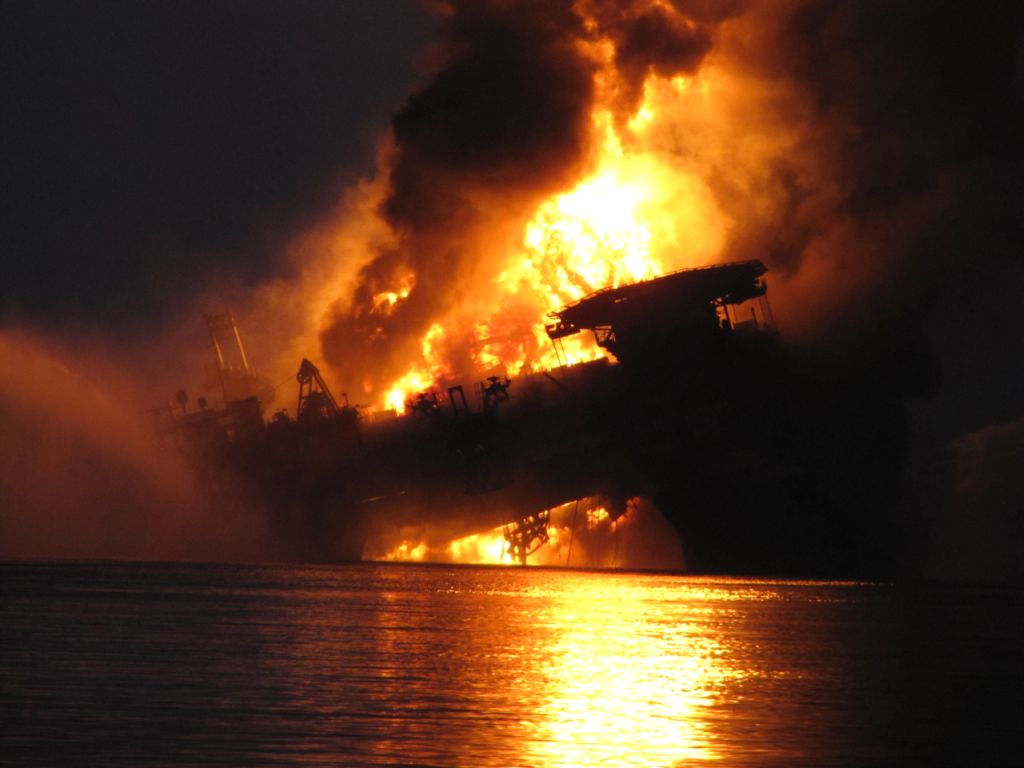
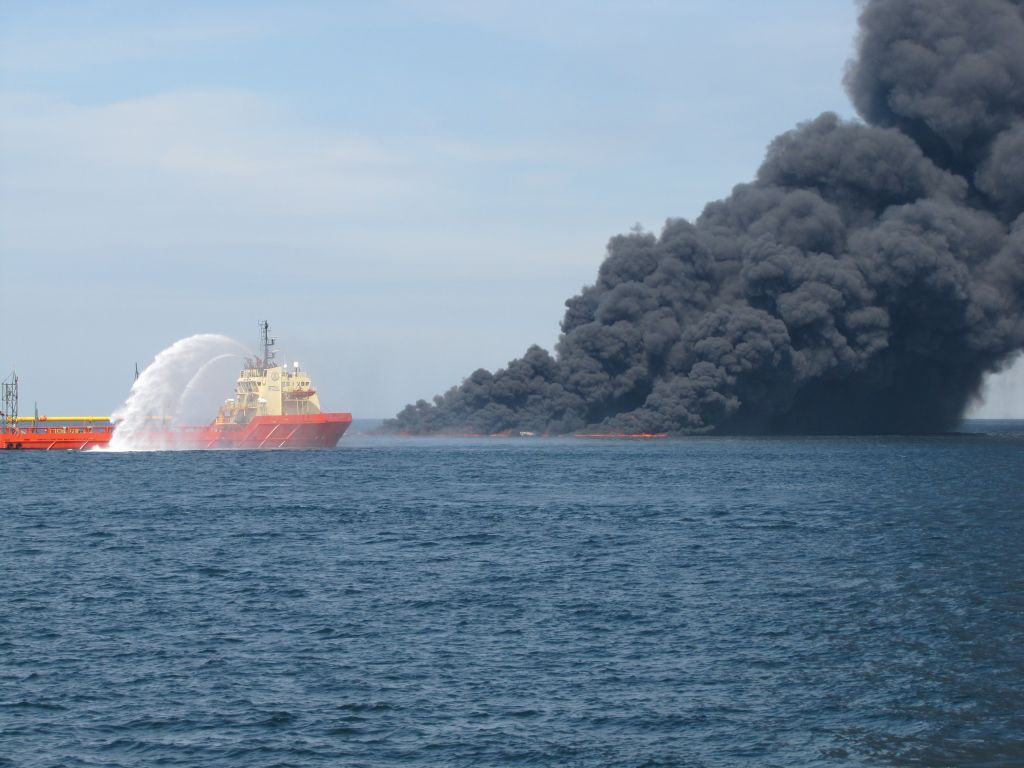
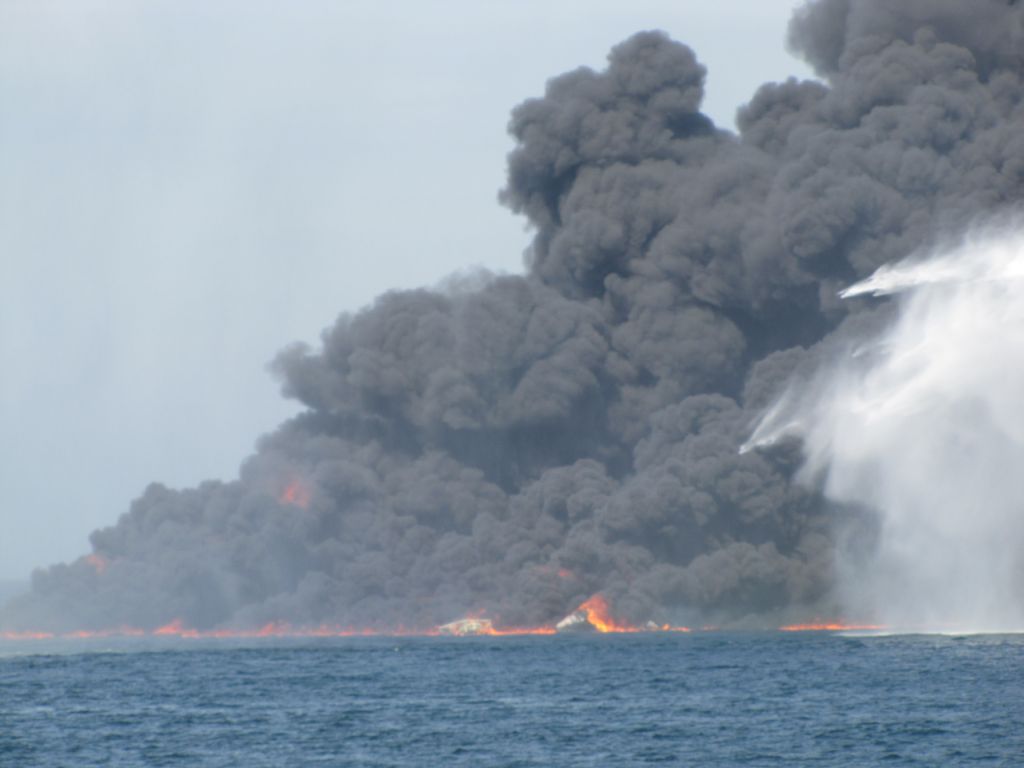
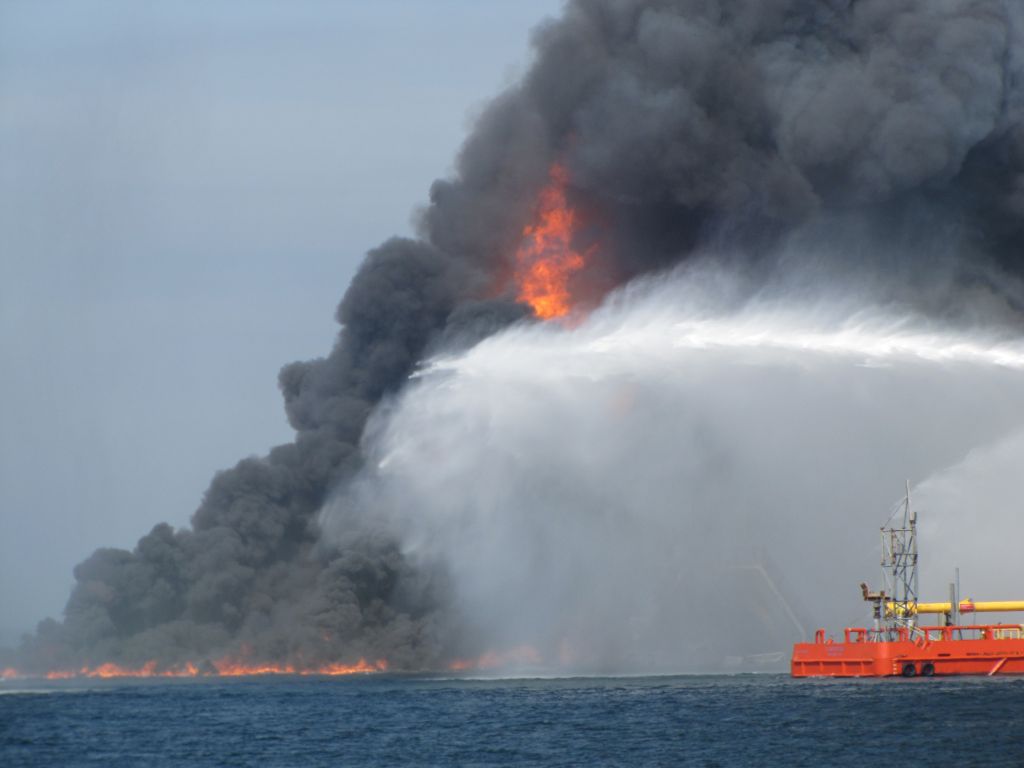
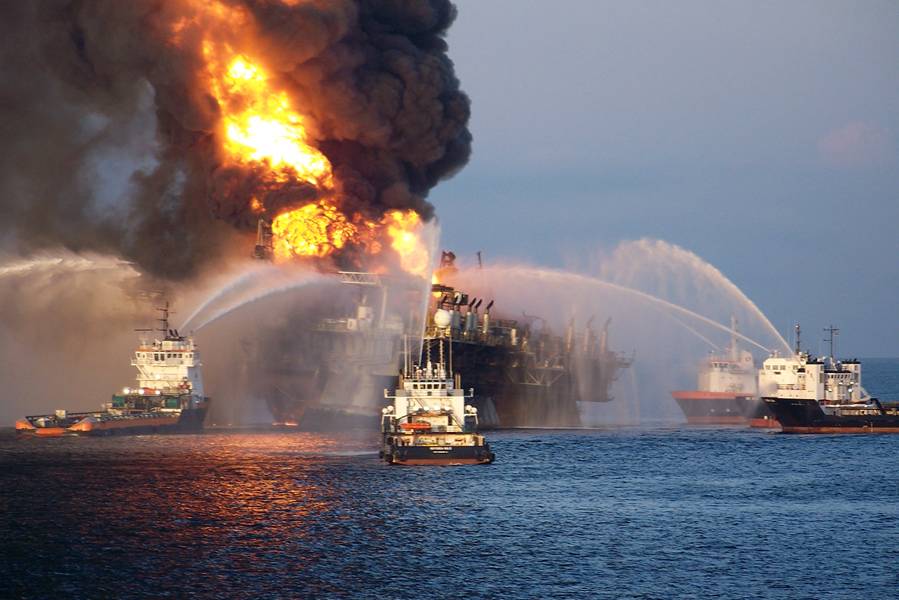

Great pics! Fire = Oil Consumption. Will be curious to see what happens when the fire is out? Oil spill of major proportions??

Let em drill.. More jobs and better fishing around these rigs Im all for it!
Dduck read the post above the pics., seems the fire is out and surprisingly very little oil spill. What I'm waiting for is how the media will play this thing into something outragous.
From what I understand the oil wells now have shut off valves soemwhere at the ocean floor that automatically close when pressure, temp rise or other things happen to prevent an oil spill. What you won't hear is the media telling you about this safety feature.
this morning got information from the USCG and reported the same thing my northern Gulf friend did, very little oil spilled. Most of the escaped oil burned or is under control.
Appears that different media sources are reporting different things. One network is now saying that the coast guard has confirmed that crude is leaking on the ocean floor. Who really know what's going on. This is what I love about our news media. They can't seem to report the same news about the same event.

They had everything under control until the rig sank and apparently broke the well head off below the primary shut off valve. Now they have a serious leak to deal with. There is another valve below the leak, but they have to manually close it with a remote controlled sub 5,000’ down. We have a buddy on one of the recovery vessels out there and they all seem confident that they’ll get it shut off soon. Fortunately we’ve had strong N winds since the new leak started, so all oil is staying well offshore.
OK
Dave said you can set your own time under the Profile. To get to EDST, use -4 hours GMT.
Basically, I think I'm for drilling as well. The more structure the better. However, a spill of this magnitude could be devastating!! Here's another link to a Fox News article:

Looks like the 10 AT-A-Boys for Drilling will get kicked in the head by one Ah-Sheet.
What bad timing for the governors’ efforts to Get-R Done. Or in this case Get-R Drilled.
April 26, 2010
Transocean Rig Disaster: The Well From Hell
Once more unto the breach, dear friends, once more. Here's another update on the disaster that befell Transocean Ltd. (RIG: NYSE) and BP (BP: NYSE) last week in the Gulf of Mexico. (Thanks to OI reader Steve, in Texas, for sending some of the photos in today’s alert.)
As you know by now, the drilling vessel Deepwater Horizon exploded, burned and sank last week, with the loss of 11 workers and injuries to many more. What happened? What's happening now? What's going to happen? I've spent the weekend working to piece things together.
An Ill-fated Discovery
According to news accounts, at about 10 p.m. CDT last Tuesday, Deepwater Horizon was stable, holding an exact position in calm, dark seas about 45 miles south of the Louisiana coastline. Water depth in the area is 5,000 feet. The vessel manifest listed 126 souls on board.
Deepwater Horizon was finishing work on an exploration well named Macondo, in an area called Mississippi Canyon Block 252. After weeks of drilling, the rig had pushed a bit down over 18,000 feet, into an oil-bearing zone. The Transocean and BP personnel were installing casing in the well. BP was going to seal things up, and then go off and figure out how to produce the oil -- another step entirely in the oil biz.
The Macondo Block 252 reservoir may hold as much as 100 million barrels. That's not as large as other recent oil strikes in the Gulf, but BP management was still pleased. Success is success -- certainly in the risky, deep-water oil environment. The front office of BP Exploration was preparing a press release to announce a "commercial" oil discovery.
This kind of exploration success was par for the course for Deepwater Horizon. A year ago, the vessel set a record at another site in the Gulf, drilling a well just over 35,000 feet and discovering the 3 billion barrel Tiber deposit for BP. So Deepwater Horizon was a great rig, with a great crew and a superb record. You might even say that is was lucky.
But perhaps some things tempt the gods. Some actions may invite ill fate. Because suddenly, the wild and wasteful ocean struck with a bolt from the deep.
The Lights Went out; and Then...
Witnesses state that the lights flickered on the Deepwater Horizon. Then a massive thud shook the vessel, followed by another strong vibration.
Transocean employee Jim Ingram, a seasoned offshore worker, told the U.K. Times that he was preparing for bed after working a 12-hour shift. "On the second
Indeed, something was very wrong. Within a moment, a gigantic blast of gas, oil and drilling mud roared up through three miles of down-hole pipe and subsea risers. The fluids burst through the rig floor and ripped up into the gigantic draw-works. Something sparked. The hydrocarbons ignited.
In a fraction of a second, the drilling deck of the Deepwater Horizon exploded into a fireball. The scene was an utter conflagration.
Evacuate and Abandon Ship
There was almost no time to react. Emergency beacons blared. Battery-powered lighting switched on throughout the vessel. Crew members ran to evacuation stations. The order came to abandon ship.
Then from the worst of circumstances came the finest, noblest elements of human behavior. Everyone on the vessel has been through extensive safety training. They knew what to do. Most crew members climbed into covered lifeboats. Other crew members quickly winched the boats, with their shipmates, down to the water. Then those who stayed behind rapidly evacuated in other designated emergency craft.
Some of the crew, however, were trapped in odd parts of the massive vessel, which measures 396 feet by 256 feet -- a bit less than the size of two football fields laid side by side. They couldn't get to the boats. So they did what they had to do, which for some meant jumping -- and those jumpers did not fare so well. Several men broke bones due to the impact of their 80-foot drop to the sea. Still, it beat burning.
With searchlights providing illumination, as well as the eerie light from the flames of the raging fire, boat handlers pulled colleagues out of the water beneath the burning rig. In some instances, the plastic fittings on the lifeboats melted from the heat.
The flames intensified. Soon it was impossible for the lifeboats to function near the massive vessel. The small boats moved away from the raging fountain of fire fed by ancient oil and gas from far below.
The lifeboat skippers saved as many as they could find -- 115 -- but couldn't account for 11 workers who were, apparently, on or around the drill deck at the time of the first explosion. Nine of the missing are Transocean employees. Two others work for subcontractors.
Damon Bankston to the Rescue
Fate was not entirely cruel that night. Indeed, a supply boat was already en route to the Deepwater Horizon. It was the Tidewater Damon Bankston, a 260-foot long flat-deck supply vessel.
Damon Bankston heard the distress signal. Her captain did what great captains do. He aimed the bow toward the position of Deepwater Horizon. Then he tore through the water, moved along by four mighty Caterpillar engines rated at 10,200 horsepower. Soon, the Damon Bankston arrived on scene, sailed straight into the flames and joined the rescue.
Meanwhile, Coast Guard helicopters lifted off from pads in southern Louisiana, and Coast Guard rescue vessels left their moorings. "You have to go out," is the old Coast Guard saying. "You don't have to come back."
The helicopters flew in the black of night toward a vista of utter disaster. Arriving on scene, the pilots watched in awe as columns of flame shot as high as a 50-story building. The helicopters were buffeted by blasts of super-heated wind coming from the flames, while chunks of soot the size of your hand blew by.
The pilots hovered in the glow of the blazing rig, while Coast Guard medics fast-roped down to the deck of Damon Bankston . The medics quickly assessed the casualties, strapped critically injured crewmen to backboards and hoisted them up to the helicopters. Then the pilots turned north and sped ashore to hospitals.
Uninjured survivors returned to land on the Damon Bankston. And others came out to fight the blistering flames.
But the Deepwater Horizon wasn't going to make it. The situation deteriorated, to the point of complete catastrophe. The ship was lost.
At about 10 a.m. CDT on Thursday morning, 36 hours after the first explosion, the Deepwater Horizon capsized and sank in 5,000 feet of water. According to BP, the hulk is located on the seafloor, upside-down, about 1,500 feet away from the Macondo well it drilled.
Still Spilling Oil
On Friday, I told you that the oil well drilled by the Deepwater Horizon was sealed in. The "official" word was that the well wasn't gushing oil into the sea. My sources were no less than U.S. Coast Guard Rear Adm. Mary Landry, of the New Orleans district, as quoted in The New York Times.
But over the weekend, Rear Adm. Landry and The New York Times reported that the well IS leaking oil, at a rate of about 1,000 barrels per day.
The on-scene information comes from remotely operated underwater robots that BP and Transocean are using to monitor the well and survey all the other wreckage of the Deepwater Horizon. There's now a large amount of equipment and pipe and a myriad of marine debris on the seafloor near the well. It's a mess.
Apparently, the blowout preventer is not controlling the flow of oil. According to Transocean, the blowout preventer on Deepwater Horizon was manufactured by Cameron Intl. (CAM: NYSE).
What happened? We don't know that just yet. Earlier reports that underwater robots sealed the blowout preventer were wrong. It's possible that the blowout preventer is only partially closed. We'll find out, eventually. Meanwhile, BP and Transocean have announced that they will make another effort to activate the blowout preventer. They need to stop that oil.
BP is also preparing to drill one or more relief wells to secure the site permanently. BP has mobilized the drilling rig Development Driller III, which is moving into position to drill a second well to intercept the leaking well. With the new well, the drillers will inject a specialized heavy fluid into the original well. This fluid will secure and block the flow of oil or gas and allow BP to permanently seal the first well.
Riser Problems?
According to the Coast Guard and BP, oil is leaking from two spots along what is left of the riser system. Here's a schematic view:
Originally, the risers (represented by the blue line in the graphic above) were affixed to the blowout preventer on the seafloor, and extended 5,000 feet straight up to the "moon pool" of the Deepwater Horizon. When the drilling vessel sank, it took the riser piping and bent it around like a pretzel.
The remnants of the riser system now follow a circuitous underwater route. According to BP, the risers extend from the wellhead up through the water column to about 1,500 feet above the seabed. Then the riser system buckles back down toward the seafloor. (Frankly, I'm astonished that it all held together as well as it has. It's a credit to the manufacturer, which I'll discuss below.)
According to the Transocean website, the riser devices on the Deepwater Horizon were manufactured by VetcoGray, a division of General Electric Oil & Gas. The specific designation is a "HMF-Class H, 21-inch outside diameter riser; 90 foot long joints with Choke & Kill, and booster and hydraulic supply lines."
Here's a photo of something similar. These are Vetco risers sections that I saw on another vessel, the Transocean Discoverer Inspiration, when I visited that ship last month:
The different color stripes on the risers indicate differing amounts of buoyancy. The idea is to put heavy riser pipe down at the bottom, connected to more buoyant risers above. The buoyancy keeps the entire riser system in more or less neutral buoyancy, so that the drill ship doesn't have to somehow hoist up the huge weight of all that pipe.
As you can see, there's a large-diameter pipe in the middle of each riser. That pipe is then encased in a buoyant foam substance. The risers are bolted together at the flange sections. The bolts are about as big as the arm of a very strong man. The nuts, which tighten things down, are the size of paint cans.
After the risers are assembled and hanging down from the drilling vessel, the drilling personnel lower and raise drilling pipe through the large-diameter center riser pipe. All the drilling mud stays inside the drill pipe on the way down hole, and inside the riser pipe on the return.
On the side of the riser sections, you can see smaller-diameter pipes. These are choke & kill, booster and hydraulic pipe components. The pipes run parallel to the large-diameter inner pipe. These pipe systems run down to the blowout preventer on the seafloor.
The idea is to keep the drilling process an enclosed system. All the "drilling stuff" -- the drill-pipe, drilling-mud and drill-cutting returns -- stays inside the large-diameter pipe. The smaller pipes hold fluid to transmit hydraulic power and help control drilling. In particular, the pipes on the side aid in communicating with and controlling the blowout preventer.
Technical Specs
Ideally, when the risers are working as intended, nothing leaks out into the sea. Then again, you're not supposed to twist and bend the riser sections like a pretzel. So how strong is a riser system? Extremely strong, actually.
According to technical literature from GE Oil & Gas, the riser equipment is "designed for use in high-pressure, critical service and deep-water drilling and production applications." The pressure-containing components are rated for working pressures of 15,000 psi. That's the same as the Cameron blowout preventer on the Deepwater Horizon. The materials used in risers have exceptional tensile and bending load characteristics.
According to Vetco paperwork that I've seen, the Class H riser sections have a 3.5 million pound load-carrying capacity. That's the equivalent weight of about four fully fueled Boeing 747s. These risers are super strong.
Still, it's not just any one single piece of riser section that does it all. These sections all get bolted together, for 5,000 feet in this case. The riser sections all have to work together as a system. The whole string is only as strong as the weakest spot. And yes, even the strongest steel will break if you apply enough stress.
It all has to work together. You've got the riser sections, along with things called HMF flanged riser connectors. Then there are HMF riser joints; flex joints; telescopic joints; and, near the top, things called "fluid-bearing, nonintegral tensioner rings." Together, these all comprise the marine riser system.
In general, the riser components compensate for heave, surge, sway, offset and torque of the drilling vessel as the ship bounces around on the sea surface. The bottom line is to maintain a tight seal -- what's called "integrity" -- between the subsea blowout preventer stack and the surface during drilling operations.
Down at the bottom, at the seafloor, the risers are connected to the blowout preventer by a connector device. The GE-Vetco spec is for a device that accommodates 7 million foot-pounds of bending load capacity. That's about eight fully fueled Boeing 747s.
What's the idea? You want a secure connection between the high-pressure wellhead system and the subsea blowout preventer stack. That's where mankind's best steel meets Mother Nature's high pressures.
High pressures? You had better believe it. And in this case, Mother Nature won. So looking forward, there's going to be a lot of forensic engineering on the well design and how things got monitored during drilling. Transocean drilled the well, but BP designed it. So the key question is how did the down-hole pressures get away like they did?
What Happens Now?
It's a good thing that the Deepwater Horizon didn't settle right on top of the well. At least there's room for the remotely operated vehicles to maneuver. Also, there's still a lot of riser still floating in the water column. So there's some element of integrity going down to the blowout preventer.
It's absolutely imperative to shut off that oil flow. We just have to hope and pray that the BP and Transocean people can get the blowout preventer shut off. Or that there's enough integrity to the risers somehow to get in there and control the leaks, perhaps with some sort of plug. One other idea is to lower a large "hood" over the leak and capture the oil so it can be pumped up to a storage tanker ship.
Meanwhile, the relief well has to go down -- carefully and safely. This Macondo well is history. Seal it. Mark it. Give it back to the sea. Move on. Don't tempt fate on this one.
And wow... for a relatively modest-sized deep-water discovery, this thing sure has turned into the well from hell.
Welcome to the World of Deep-water Risk
As I've said before, this accident is Mother Nature's wake-up call to everyone. Deep-water drilling is a high-stakes game. It's not exactly a "casino," in that there's a heck of a lot of settled science, engineering and technology involved.
But we're sure finding out the hard way what all the risks are. And it's becoming more and more clear how the totality of risk is a moving target. There's geologic risk, technical risk, engineering risk, environmental risk, capital risk and market risk.
With each deep well, these risks all come together over one very tiny spot at the bottom of the ocean. So for all the oil that's out there under deep water -- and it's a lot -- the long-term calculus of risk and return is difficult to quantify.
There's more to discuss, but I'll end here today. I'll update you as things evolve. This is big news all through the offshore industry. There are HUGE environmental issues, and certainly big political repercussions. I won't go there just now.
For now, I'll just send out collective best wishes to the people at Transocean, BP, the Coast Guard, Minerals Management and so many more. I'm sure they're doing their best.
Thanks for reading...