

SWC Forums
Pull up a chair...let's talk fishing.

When fish are harvested prior to maturation and spawning, the reproductive potential of a fish stock can be severely compromised, resulting in poor recruitment of new fish to the population. This fishing strategy has the potential to limit rebuilding of the stock by limiting reproductive potential.
This is what occurs when size limits are employed to control harvest. The catch target has been increased five times over approx. 8 years. Remember now, we started at 12" fish.... then 13" fish..... then 13.5" fish..... then 14" fish..... and now 15" fish. What else is to be expected when the only fish anyone is allowed to take are the adult spawning fish.

Seacern posted "Fifty-percent of females were mature by 408 mm TL (16-inches), and most females appeared to be mature by age-2."
Am not sure where seacern pulled that number from but the southern Flounder committee was told several years ago by DMF biologist that by going to 14 inch min we would allow most southern flounder to spawn. Think if we were to go to 15 inches it would allow all of them to spawn at least once.
DE, the harvest window is now so narrow it's a wonder any fish at all have the probability of passing through it. The productive fish are targeted and removed from the resource.
Just took a look at landings data and it appears NC is the only state with commercial landings, with exception to a small amount landed in Louisiana. I suspect CCA is fully aware of this, they just want game fish for flounder now.

Buddy Roe - I believe the recs went to 15" which had the effect of synch our southern flounder (inside) regs with the summer flounder regs (ocean).
I believe the commercial regs kept the 14" size limit.
But one usually trades some harvest for increased discard mortality.
DE - maybe with the climate change, flounder are growing faster and spawning a bit bigger. Newer/different data in this stock assessment.
From the stock assessment:
Monaghan and Armstrong (2000) found that 50% of females were mature by 345 mm TL [13.6"], and most females appeared to mature by age-1 (Table 7). Histological results were not resented, although histological data were collected in 1995–1998. Midway and Scharf’s (2012) results were substantially different from the earlier maturity study. Fifty-percent of females were mature by 408 mm TL [16"], and most females appeared to be mature by age-2. Histological results indicated the threshold macroscopic maturity category, the developing stage, represented mostly mature females, with a classification success rate of 61%.
Buddy Roe - I believe the recs went to 15" which had the effect of synch our southern flounder (inside) regs with the summer flounder regs (ocean).
If you look a little deeper think you may find reasoning to be exceeding recreational quota with respect to size increase. (14" to 15")
Also quite interesting Shcarf's study supports exactly what I have been saying for years. Shifting the harvest window to the mature spawning fish is not going to help produce more spawn. But now that we have cheap imports for restaurants, I suppose those 12" dinner flounder don't really matter anymore.
~
Maybe so, KS, but I like having a unified reg.
Admit I've only skimmed the stock assessment twice, but one of the issues is estimated high rec discard mortality and I believe some of that is the increase from 14-15". Amazing how many 14-14 3/4" fish I caught this year both from the boat and from the surf, some with the hook deep and likely some negative impact.
But that aside, I think the letter and the stock assessment (even with the SA limitations) presents a persuasive argument that harvest needs to be reduced - yet again. And I'm on record as wanting a TAC and timely electronic reporting for the commercials. As for the rec side - no good answers here either. ?seasonal closures.
When fish are harvested prior to maturation and spawning, the reproductive potential of a fish stock can be severely compromised, resulting in poor recruitment of new fish to the population. This fishing strategy has the potential to limit rebuilding of the stock by limiting reproductive potential.
This is what occurs when size limits are employed to control harvest. The catch target has been increased five times over approx. 8 years. Remember now, we started at 12" fish.... then 13" fish..... then 13.5" fish..... then 14" fish..... and now 15" fish. What else is to be expected when the only fish anyone is allowed to take are the adult spawning fish.
Please allow me to correct the misstatements above-
1st-
The Recreational size limit is 15".
The Commercial size limit is 14".
2nd
Plainly stated in my post above is the DMF's own biological statistic that says "Fifty-percent of females were mature by 408 mm TL (16-inches), and most females appeared to be mature by age-2.
Nowhere is there any credible evidence that says "the only fish anyone is allowed to take are the adult spawning fish." In fact, that statement is absolutely false. To the contrary, neither commercial nor recreational size limits have ever targeted fully sexually mature females. I do hope everyone understands the importance of females.
3rd
There is merit to reviewing the possibility of recreational anglers having a size/creel limit combo that allows them to keep smaller fish. The thought is that post-release mortality from regulatory discards is a fact- a dead fish is a dead fish. Rules would need to prevent continued fishing and high-culling after retaining a smaller fish. Such rules are very difficult to enforce and may not be practical.
4th
The commercial sector has a market for "whole baby flounder". The gear is designed to harvest a 14" flounder, of which females are pre-spawn subadults, with the current average age structure being .75-Age. (Again, completely opposite of the statement "What else is to be expected when the only fish anyone is allowed to take are the adult spawning fish."
My opinion:
Pounds nets can harvest every commercial pound the resource can currently afford to give if harvest restrictions are based on ending overfishing and sustainable harvest; if not every pound, then pound nets and gigs certainly can.
Pound net escape panels are more efficient at reducing regulatory discards than is increasing minimum mesh size in a gillnet. Post release mortality from pound nets, while not quantified, is substantially less than gillnets- one only has to look at the quality of the harvested fish to understand the premise.
Recreational harvest, particularly post-release mortality from regulatory discards has to be addressed in an enforceable manner. Circle hook requirement is probably the answer. I will guess that the majority of recreational regulatory discards are in the non-targeted "pot luck" fisheries, which makes management difficult unless the NCWU and NCFA is successful at shutting down all hook and line fishing in NC.
What is important is that we don't allow deflections to take our eye off the ball.
The greatest opportunity for meaningful harvest reductions/restrictions lies with the anchored large-mesh gillnet fishery. That gear is the low hanging fruit and has the greatest management cost and environmental cost many times over all other gears combined. Gillnets account for 42% of total harvest and over 60% of commercial harvest.
Consider these facts when deciding if Pounds nets can harvest the reduced commercial share that will end overfishing and return the fishery to a sustainable harvest.
Pound Nets harvested 64% (10-year average) of the 3-million pound commercial harvest in 1980 with gillnets harvesting 13%. Pound nets harvested 1.9-million pounds.
The current fishery needs to be cut in half- The total allowable catch (TAC) should be 1.3-million pounds across all sectors.
BW, Was also thinking there could very well be two separate stocks of southern flounder, much like red drum.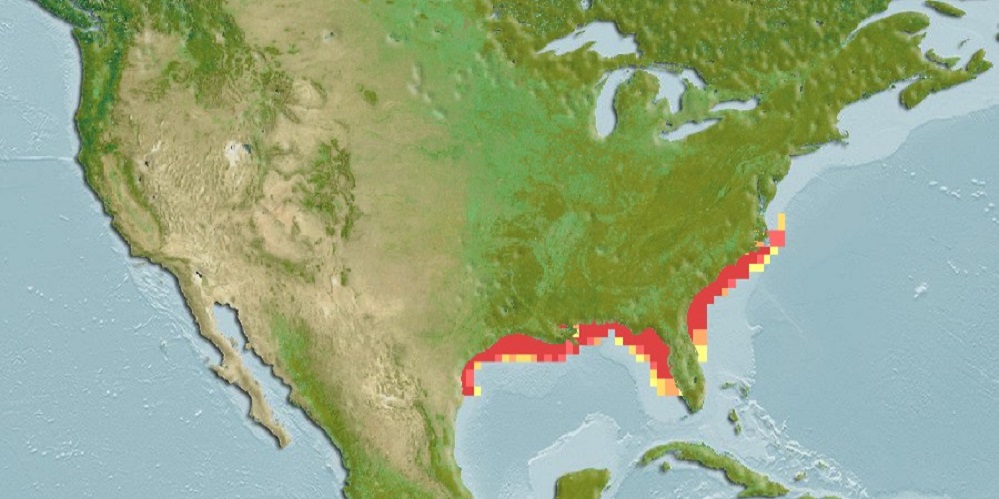
It seems that once we are told the facts from one study we are later told another study is more accurate and to disregard the former. Anyways from what I can determine we are still harvesting too many 1 year old flounder or flounder that have not spawned yet. Even though most 14 to 15 inch flounder are mature and full of roe come September, that fish has to go thru a lot of nets and other obstacles in order to get out to the deeper waters of the ocean for its first
early winter spawn. A simple solution to this is to simply increase the size limits on flounder starting in sept along with an increase in mesh size to ensure that 13 to 15 3/4 inch flounder are not caught by any gear. Fall gill nets can be required to use at least 6 inch stretch along with a larger escape panel for pound nets. Circle hooks should work for the problem with rec discard mortality. My opinion for what its worth and imagine that my phone will be ringing off the hook when I get home complaining about my suggestion. If we don't do what we can to fix the problem now then you can bet your butt that eventually we will not be able to use nets one day soon.
".....unless the NCWU and NCFA is successful at shutting down all hook and line fishing in NC. "
One has a hard time determining if that would be good or bad. Certainly in the short term it would have terrible consequences on many more than the 800,000 rec fishermen and would make commercials very happy. In the near and long term I believe it would be the best thing as it would be the end of gillnets and have farther consequences on ALL nets including pound and trawls.
Plainly stated in my post above is the DMF's own biological statistic that says "Fifty-percent of females were mature by 408 mm TL (16-inches), and most females appeared to be mature by age-2.
Nowhere is there any credible evidence that says "the only fish anyone is allowed to take are the adult spawning fish." In fact, that statement is absolutely false. To the contrary, neither commercial nor recreational size limits have ever targeted fully sexually mature females. I do hope everyone understands the importance of females.
SeaCern, why all the misinformation ?
If you spent any time on the water or cleaning fish you would know that nearly ever flounder caught and landed is a female fish. What I said is completely and fully credible and below are excerpts demonstrating that credibility.
Southern flounder reach sexual maturity at ages 1 and 2, the males as small as 230 mm (9.1 inches) in length and weighing about 0.1 kg (0.3 pounds) and the females as small as 320 mm (12.6 inches) and weighing approximately 0.4 kg (0.8 pounds) (Wenner et al. 1990; Safrit and Schwartz 1998; Daniels 2000; Monaghan and Armstrong 2000).
Female southern flounder grow larger and at a faster rate than male southern flounder (Wenner et al. 1990; Fischer and Thompson 2004; Wenner and Archambault 2005; Takade-Heumacher and Batsavage 2009). The largest female southern flounder collected in North Carolina was 835 mm (32.9 inches) and 9.3 kg (20.5 pounds) (Takade-Heumacher and Batsavage 2009). Males exceeding 330 mm (13 inches) and 0.5 kg (1 pound) are uncommon (Wenner et al. 1990; Fischer and Thompson 2004, Takade-Heumacher and Batsavage 2009).
http://portal.ncdenr.org/c/document_library/get_file?uuid=912b88d1-f297-4eab-8306-fbff2356d345&groupId=38337
-------------------
Female southern flounders remain in brackish waters most of the year, only moving offshore to spawn in fall and winter. Most adult males remain offshore year round.
http://www.usm.edu/gcrl/public/fish/flounder.php
-----------------
Male and female southern flounder are almost like two different species of fish. Males grow slower and have a short life span, almost never living over 3 years old or growing over 14 inches long. Females live longer and can grow to 28 inches. Also, after their first year of life, males live mostly in offshore waters. This means that most of the inshore catch consists of females. Southern flounder, both male and female, spend their first year after hatching in shallow, low-salinity estuary and even river waters.
http://www.seagrantfish.lsu.edu/biological/misc/southernflounder.htm
~
This means that most of the inshore catch consists of females. ~
Thank you.
From the 2014 Fishery Management Plan posted by Dave above as a pdf file.
Fifty-percent of females were mature by 408 mm TL (16-inches), and most females appeared to be mature by age-2.
The terminal year age-averaged fishing mortality estimate was 0.75
Fisheries for southern flounder, target and discard smaller, mostly immature fish.
Histological results indicated the threshold macroscopic maturity category, the developing stage, represented mostly mature females, with a classification success rate of 61%.
None of the above support your statement that "the only fish anyone is allowed to take are the adult spawning fish."
Maybe this will help you understand the aging parmeters of the Stock Assessment- Page 16.
Two studies have attempted to describe maturity patterns for southern flounder in North Carolina, Monaghan and Armstrong (2000) and Midway and Scharf (2012). Monaghan and Armstrong (2000) examined length and age at maturity using NCDMF biological samples collected during 1995‒1998 and macroscopic gonad staging methodology. Although they indicated that histological validation of the macroscopic staging criteria was completed, results from the histological study were not presented, and it was not clear that the classification success rates developed from the histological study were accounted for in the final estimates of size and age at maturity. Midway and Scharf (2012) also used combined macroscopic and histological gonad staging criteria. In contrast to the earlier maturity study, results of the histological validation process were presented. Samples were collected at fish houses (pound nets and gill nets) and from NCDMF independent sampling programs over two years (2009 and 2010).
Monaghan and Armstrong (2000) found that 50% of females were mature by 345 mm TL, and most females appeared to mature by age-1 (Table 7). Histological results were not presented, although histological data were collected in 1995–1998. Midway and Scharf’s (2012) results were substantially different from the earlier maturity study. Fifty-percent of females were mature by 408 mm TL, and most females appeared to be mature by age-2. Histological results indicated the threshold macroscopic maturity category, the developing stage, represented mostly mature females, with a classification success rate of 61%.
Southern flounder maturity at length was estimated for this assessment using data collected by Midway et al. (2012), and samples collected by Monaghan and Armstrong (2000) that were restaged using protocols developed by Midway et al. (2013). Maturity at length (Ml) was estimated using a logistic regression model:
where l is length, is the slope, and is the inflection point. The estimated value for was -
0.33 and the estimated value for was 40.24 cm (Figure 3). Results were very similar to Midway and Scharf (2012), and Midway et al. 2013 demonstrated that the maturity schedule has not changed at least since the mid-1990s.
Great letter ~ CCANC shows concern for the resource and not either recs or comms. Severe reductions are required and need to be put in place for sometime. What is sad is it has had to go this far and the director still wants to put off what he knows is required.
I've been thinking about this.
It's not clear from the Stock Assessment (and the subsequent reviewers comments) that reductions will increase the population. That was pretty clear.
No doubt it worth trying.
But, I think if I got any solid takeaway from the assessment document itself in combination with the reviewers commentary, it's that with the data inputs and models used at present, it is very unclear WHY the population is not increasing now.
Bottom line and oft-repeated: we need more data and a better understanding of how that data relates to the population. That does not change your point, of course. Reduced mortality can't HURT.

I don't trust the CCA one bit. Reading through this, all the problems are directed at the commercial guys. Now they are threating to get lawyers involved. Same ole CCA crap: pay the money and and you can fish. We want it for ourlself
Lower the limits to 4/day and 16 inches.
Listen to Baitwaster, and Tim Barfoot!!!!!!!!!!.
Recreational harvest, particularly post-release mortality from regulatory discards has to be addressed in an enforceable manner.
Indeed. I had to read several times to make sure I was not misreading the gig release mortality numbers.
You mentioned gill nets as the low hanging fruit. Did I misread the data that rec gigging has been the big player since 2008?
In either case, I'll have to review the report. William's review was the most interesting of the three to me. I want to read the Assessment again after reading his (constructive) review.