

SWC Forums
Pull up a chair...let's talk fishing.

We are all watching the unfolding oil spill incident occurring in the Gulf
of Mexico and are deeply concerned over the anticipated impacts this spill
can have on marine life and the economies which rely on them.
I want to give you a brief summary of NOAA's and Fisheries' full engagement
in the response process and provide you with a link to a web page NOAA has
established through its Office of Response and Restoration where you can be
kept informed of daily events.
As you know, on April 20th there was an explosion that resulted in a fire on
the Deepwater Horizon, a mobile offshore drilling unit in the Gulf of Mexico
~50 miles offshore Louisiana. The rig burned for hours and then sank. Eleven
out of 126 people remain unaccounted for. It was recenlty discovered that
there are multiple leaks at a depth of 5,000 feet.
So far, attempts to use remotely operated vehicles to close valves and stop
the leaks have been unsuccessful. Construction has begun on a collection
dome that will be deployed to the sea floor to collect and funnel oil as it
escapes, a method never tried at this depth before. The first rig to be used
for drilling a relief or cut-off well has arrived and more are planned. A
relief well would take several months to complete.
NOAA has fully mobilized all of its offices. Our experts are involved in
predicting where the oil is going and how the weather and sea will affect
the oil and cleanup efforts. NOAA experts are also advising the Coast Guard
on cleanup options, as well as monitoring and assessing damage to fish,
shellfish, marine mammals, sea turtles, as well as critical and essential
fish habitat.
NOAA is posting daily updates at www.noaa.gov. Click on the "NOAA Assists
Gulf of Mexico Oil Spill Efforts" link which will take you to the NOAA
Office of Response and Restoration page at
http://response.restoration.noaa.gov/deepwaterhorizon. I would encourage you
to bookmark this page as a key resource of information.
If you have additional questions, please contact Laurel Bryant at
laurel.bryant@noaa.gov.
Thank you for your interest and concern at this critical time.
Eric C. Schwaab
Assistant Administrator for Fisheries

They're telling us we may get Tar Balls from this next week, like Mon, Tues. =/
Todays Modis Shot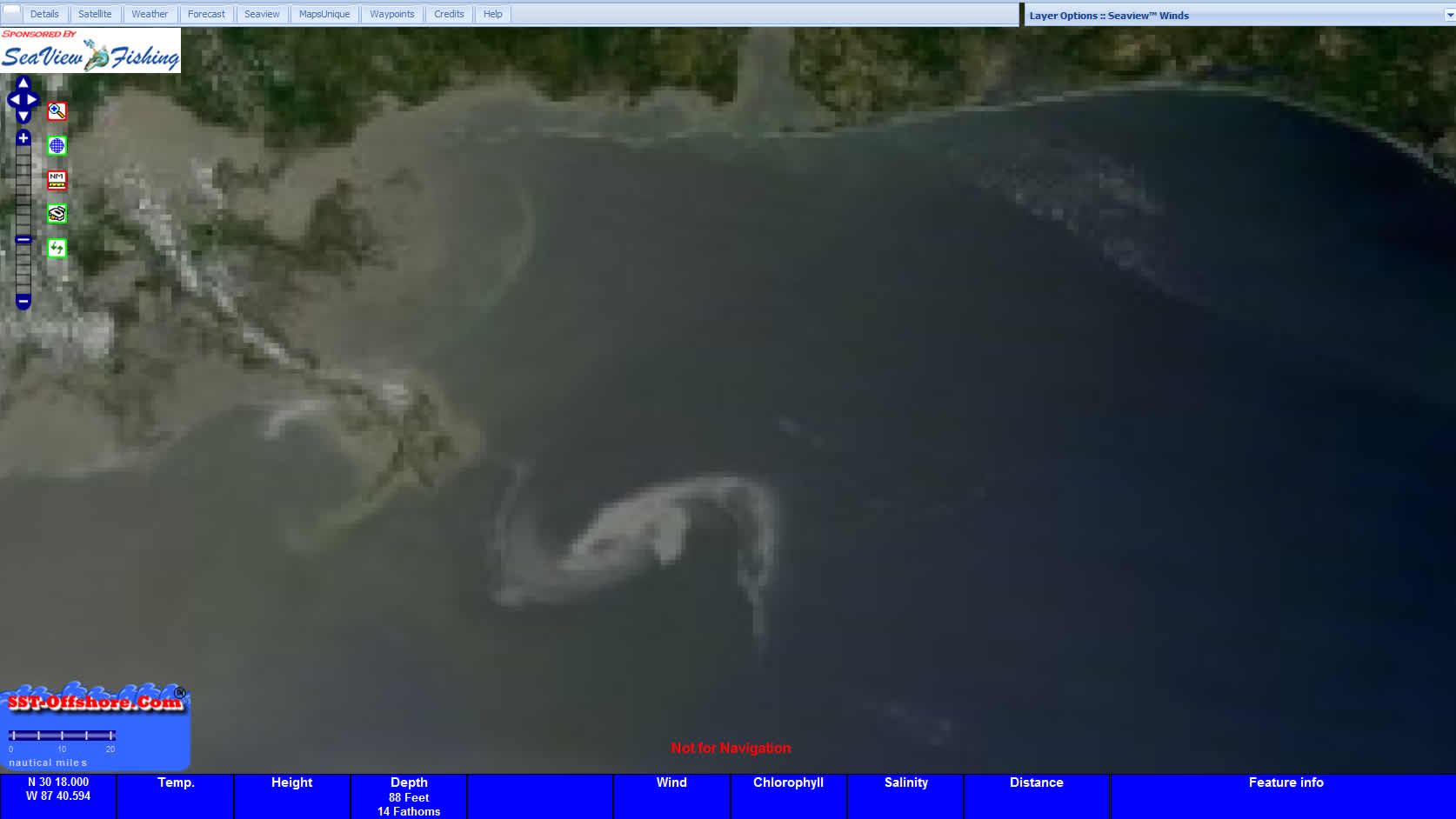

did it take so long for the administration to respond?
This incident occurred on 4/20, 8 to 9 days to respond?

Noaa isn't going to do anything useful.

There saying that this spill is making the Exxon Valdez spill look small!!

If we dont do something soon then its going to hit the whole east coast. NOAA says that the oil could reach Hatteras if not stopped. 😡
the dirty water flowing out of the Mississippi and other northern gulf rivers, traveled along the Gulf Coast of Fla. and began dissipating around Jupiter, Fl. when it mixed with the Gulf Stream.
The hurricane water was limited in scope, this spill can be dangerous to the Atlantic coast if it isn't capped.

i heard today some of the gulf coast side of fla. inlet were going to be closed.
i saw booms outta pensacola yesterday when we were over there..
in our newspaper today they said booms could be set out across Destin East Pass as soon as today... boat traffic would be open BUT if the spill gets close & with the tides whatever they will close it off.
Its going to be really bad for the gulf.
Very Very Sad.
This just kills me.
Someone really needs to go to jail for something as terrible as this.

This will make a huge impact on everything. Future oil drillers, seafood markets, recreational and commercial fishermen, etc. Its sad. Hope it all works out in the end?

Don't think that if they shut down fishing here I won't be joining a class action suit against BP like the rest of the charter guys should do.........
Shrimpers in LA filed one a week ago......... don't blame them.
Gas will be $14 per gallon before long.........
This is going to be devastating.
"After hurricane Katrina
the dirty water flowing out of the Mississippi and other northern gulf rivers, traveled along the Gulf Coast of Fla. and began dissipating around Jupiter, Fl. when it mixed with the Gulf Stream.
The hurricane water was limited in scope, this spill can be dangerous to the Atlantic coast if it isn't capped."
_________________
UF expert says oil spill could spread to east coast of Florida
By Joe Callahan
Staff writer
A University of Florida professor and oceanographic expert says he believes the east coast of Florida might see the worst of the impact of the oil spill in the Gulf of Mexico.
Y. Peter Sheng, coastal and oceanographic engineer at UF, said the six-day ocean current models released by the National Oceanic and Atmospheric Administration reveal that the western coast of Florida, from the Big Bend to Cedar Key, could be spared.
The oil slick that's growing south of the Louisiana coast could get caught in what's called the “Loop Current,†which flows through the Florida Straits and becomes the Gulf Stream.
The Gulf Stream runs up the eastern coast of Florida. Sheng said he believes it is entirely possible, even probable, that this will happen, thus impacting the beaches from Miami to Jacksonville. The Loop Current is about 35 miles south of the slick, which currently is 125 miles wide and 40 miles long.
“I would say the east coast of Florida has the higher probability (of being impacted by the oil spill),†said Sheng, adding his opinion is based on NOAA's ocean current forecast and wind direction.
Sheng said until the slick gets to shallow water, wind will not greatly impact the oil slick's movement.
If the oil slick doesn't get into the Loop Current, which would rapidly send the oil around the tip of Florida in a week, the wind direction would have to change from west to east in order to push the slick toward the western Florida peninsula.
If the spill encroaches on the shores east of Pensacola, Sheng said his biggest concerns are for wildlife and the oyster concentration in Apalachicola Bay. He said that since there is not a firm population count on most species, such as shrimp and types of fish, it will be ultimately hard to truly gauge the full impact on wildlife long after the spill is contained and cleaned up.
Sheng compared his prediction of the East Coast seeing more problems from the spill to how red tide, which used to be a problem mostly for the west coast of Florida, also entered the Loop Current and has more recently impacted the state's east coast, as well.
Lauren McKeague, with the Florida Division of Emergency Management, said state officials are treating the encroaching spill as they would a hurricane and will continue monitoring its growth over the weekend.
Karen Bjorndal, director of the Archie Carr Center of Sea Turtle Research at the University of Florida, said she is extremely worried about the impact the oil spill will have on the sea turtle population, from the foraging areas to beaches where they nest.
The center is especially concerned about the most endangered of the sea turtles, the Kemp's Ridley, as well as other breeds, such as Loggerhead and green sea turtles.
Bjorndal said a floating oil slick can be problematic for these turtles, who surface to breathe. If they surface in the oil slick, they will become coated with oil and tar. That could affect their movement. The turtles could die if they swallow the substance. Thick tar could keep them from opening their mouths to eat.
And these slicks could impact the nesting beaches. If oil and tar coat the eggs, it could impact development. And since hatchlings don't know better, they have been known to eat almost any object that might be floating, from plastic to other materials, and will nibble on a ball of tar.
Bjorndal said an active Sea Turtle Stranding and Salvage Network has volunteers throughout all of the Gulf Coast states and will be vital in finding affected sea turtles as they come ashore, whether dead or alive.
“We expect numerous sea turtles to wash ashore [during the emergency],†she said.
When it comes to the ecology, some experts say time could heal all wounds. John Jaeger, an associate professor of geological sciences at UF, said time can be a solution when it comes to clearing oil spills.
"Oil degrades as soon as it reaches an oxygenated environment, so the more water that oil goes through, the more likely it is to be converted into its different phases," Jaeger said.
Eventually, as the oil breaks down -- as it decays -- in the oxygen on the surface of the Gulf, some of it will evaporate and some will be broken down by microbes, a process that could take years.
Jaeger also said one problem officials are having in predicting where and how fast the spill will spread is determining the speed of the currents in the Gulf because NOAA doesn't have many buoys in the Gulf. He said that might be something officials take a look at after this disaster: How they can better monitor the spread of spills by evaluating water speed.
"I think you're going to see a serious evaluation of ... the ability to predict the fate of any spills that might occur in the Gulf of Mexico," he said.
One thing that came out of the Exxon Valdez disaster, he said, was an investment in better monitoring of the surface currents in Prince William Sound.
Meanwhile, with officials predicting possible landfall of oil on beaches in northwestern Florida by Monday, NOAA has contacted UF Sea Grant agents in Panama City to determine how they can assist with the impending disaster.
Steve Theberge, one of the agents contacted, said NOAA hasn't given them marching orders yet but is determining who can help and what their capabilities are, looking for everything from boat operators to those who can clean animals covered in oil.
Theberge said he's not sure how far he might have to travel to help out or what responders will need him for, but if the oil washes ashore, it's all hands on deck.
"If this hits, everything else will go on hold, at least temporarily," he said. "This will be the imminent crisis that needs to be dealt with."
And their involvement could last quite a while, he said.
Agents could be involved with researching the ecological and monetary impact for years to come, as well as figuring out when seafood will be safe to eat again and how to help the seafood industry get back on its feet, he said.
"Depending on how bad this is, it may change our lives and careers for a while," he said.