

SWC Forums
Pull up a chair...let's talk fishing.

The Recreational gill netters are the ones that bother me the most. At least the commercial guys are trying to make a living.
PiraSea I think is correct. I inshore fished the Big Bend area on the west Coast of FL last year and just got back from 2 inshore trips in the Keys.
The guides I used down there shocked NC still allows gill nets (one guy I don't think was convinced I was telling the truth). I am about 7 or 8 years away from retirement and starting to think about
where to spend my retirement years. Would love it to be NC but from a fishing perspective, NC does not make the cut. It is a shame. .
Do you guys hate that seafood consumers are free to eat 250,000 pounds of Red Drum annually or just the nets that are used to harvest a small percentage of what recreational fishermen kill with hooks every year?
Nets kill less than rec on hook and line?! Did I read that right?
Yes, look it up.
Not saying hooks are bad, there's just more of them than nets.
Would you support stocking Red Drum if both sectors could keep more?
These are both intangible opinions... you can't really know if either are true. I can tell you something that is tangible. The inshore charter industries of the low country of SC, the lagoon and backcountry of Florida, the delta of Louisiana, and the lagoons of Texas have massive inshore charter fishing economies.
If you go to the low country of SC you can see 20 charter boats in a bay for redfish. The lagoon and upper Keys are the same way in Florida. In Louisiana at the Venice Marina and Cypress Cove they have to nose the charter skiffs into the docks because if they tied up normally they would never have enough room.
These are areas with a resort/vacation coastal economy like SC and FL. These are also areas with an industrial coastal economy in LA and TX. In both of them fishermen flood in to fish inshore. They rent cars, they stay in hotels, they buy gasoline, they buy supplies and use marinas. We in NC have areas of both resort and industry on our coast just like them.
Having lived in NC and fished in all of these great redfish spots around the southeast... we in NC do not have this inshore recreational fishing economy that they have... all the while having a coast that is perfect for it. Imagine a thriving recreational redfish/trout industry in a place like Atlantic, Sea Level, or Columbia in the poorest county in NC. How about even Oriental, Belhaven or Edenton.
There's one difference in NC and the others I mentioned. Commercial netting. The folks I've fished with in SC, FL, and LA cannot believe what we allow in NC.
I can give an example of a place that looks like the end of the world, much like the drive to a place like Columbia, NC. You would be absolutely amazed at the people that fly to New Orleans, drive 2 hours south through areas that look just like the inner banks. Some drive from as far as Atlanta or Houston. They arrive in a place full of drilling operations and heavy industry. Then they find 40 inshore charter boat operations... 8-10 full service lodges... 3 full blown hotels... 3-4 restaurants and 2 marinas. Amid all that industry, all that fresh water of the Mississippi, the redfish capital of the world, Venice, LA.
We have a coastal environment that could support it just as well as they can. Think about how the Oriental area swells during the "old drum" run in the fall. The packed boat ramps at Oriental and at Cedar Island. Imagine a year round slot size redfish and trout fishery there.
Imagine a place like Sneads Ferry where a son of a man that breaks his body digging clams for a living, could grow up and take people on redfish charters for $450 a day.
It could happen on our coast... if we didn't try to kill everything that swam.
Don't the states you mention stock Red Drum to support so much recreational pressure?
Imagine a place where seafood was stocked so EVERYONE could enjoy it and professional fisherman earn a good income guiding tourists to catch their own fish or harvesting seafood for consumers. We can have the best of both worlds if we will practice proven solutions and the Golden Rule.
Don't the states you mention stock Red Drum to support so much recreational pressure?
Not really. I can find anywhere where Louisiana or Florida have stocked, SC's stocking program is sporadic, as is Texas'. Furthermore, there have been stocking studies done that show they don't have much overall effect on fish populations aside from very near the stocking locations. The stocked fish don't travel far. I know this is your pet thing but there's really no evidence it will actually help.
I was more of a fishery management purest than stocking fan before learning more about it and the alternatives.
Texas along with the CCA pioneered stocking Red Drum and do a great job at it. We should learn from past mistakes and success to make sure hatcheries have as many positive benefits and few negative impacts as possible. The alternatives to stocking are more regulations and corporate fish farms in public waters. There are some sportsmen who want to take away seafood consumer's freedom to access certain seafood that they want all for themselves. Most people who are willing to think beyond their own self-interest realize this is not a good option.
Stocking some seafood can be a very effective way to increase seafood production and recreational opportunity. It can also be a waste of effort if we don't think through the best way to do it here. Why shouldn't commercial fishermen and seafood consumers be given a chance to stock some native species the way recreational interests have been allowed to do here and in other states?
I am proud to make securing freedom and a sustainable supply of local seafood for future generations my "pet thing".

How about doing away with the nets, and have hatchery raised fish sent to market for consumption by those who are unable to catch their own. That way the native stock could thrive and the consumers could have a food supply. Maybe the netters could run the hatcheries. What do you think Chris?
How about doing away with the nets, and have hatchery raised fish sent to market for consumption by those who are unable to catch their own. That way the native stock could thrive and the consumers could have a food supply. Maybe the netters could run the hatcheries. What do you think Chris?
That is the idea behind proposed legislation that would allow corporate fish farms in public waters. There are too many negatives with raising fish to market size in coastal cages. We should be raising more sedentary fish in land-locked ponds. We should also cultivate a wild-caught seafood production system that can feed the masses when something disrupts our food supply.
Maybe we should look at Alaska's success with stocking seafood for everyone to enjoy rather than allowing foreign corporations to raise salmon in coastal cages. They seem to have a good thing going for everyone involved.
The Recreational gill netters are the ones that bother me the most. At least the commercial guys are trying to make a living.
That's right. I should have said both. The worst is 2 old retired guys in a Jon boat tending a large mesh gill net in front a creek draining a falling tide. I can atleast see the commercial guy making some money. The recreational better is just a killer.
I agree with RonJon. I just hope something changes. Look at the SC, GA, and FL. Do they have this problem? No
Correct they all have three hatcheries per state and no problem.
If the CCA would quit blocking development of hatcheries in NC, we might have that kind of support as well.
But as for the folks who can't find any drum, you might want to hire guides to take you as there seem to be lots of them around and the problem might be you suck at fishing.
I agree with RonJon. I just hope something changes. Look at the SC, GA, and FL. Do they have this problem? No
But as for the folks who can't find any drum, you might want to hire guides to take you as there seem to be lots of them around and the problem might be you suck at fishing.
I don't suck at fishing & am having a hard time catching Reds.
Sight fish for them, maybe 3 times a week, sometimes more.
Found a large school of Reds one day the, the next day there's a netter all over them.
Have found small dead sharks with net marks in the same area. And have not seen that school again.
Coincident? I don't think so. ....... ICM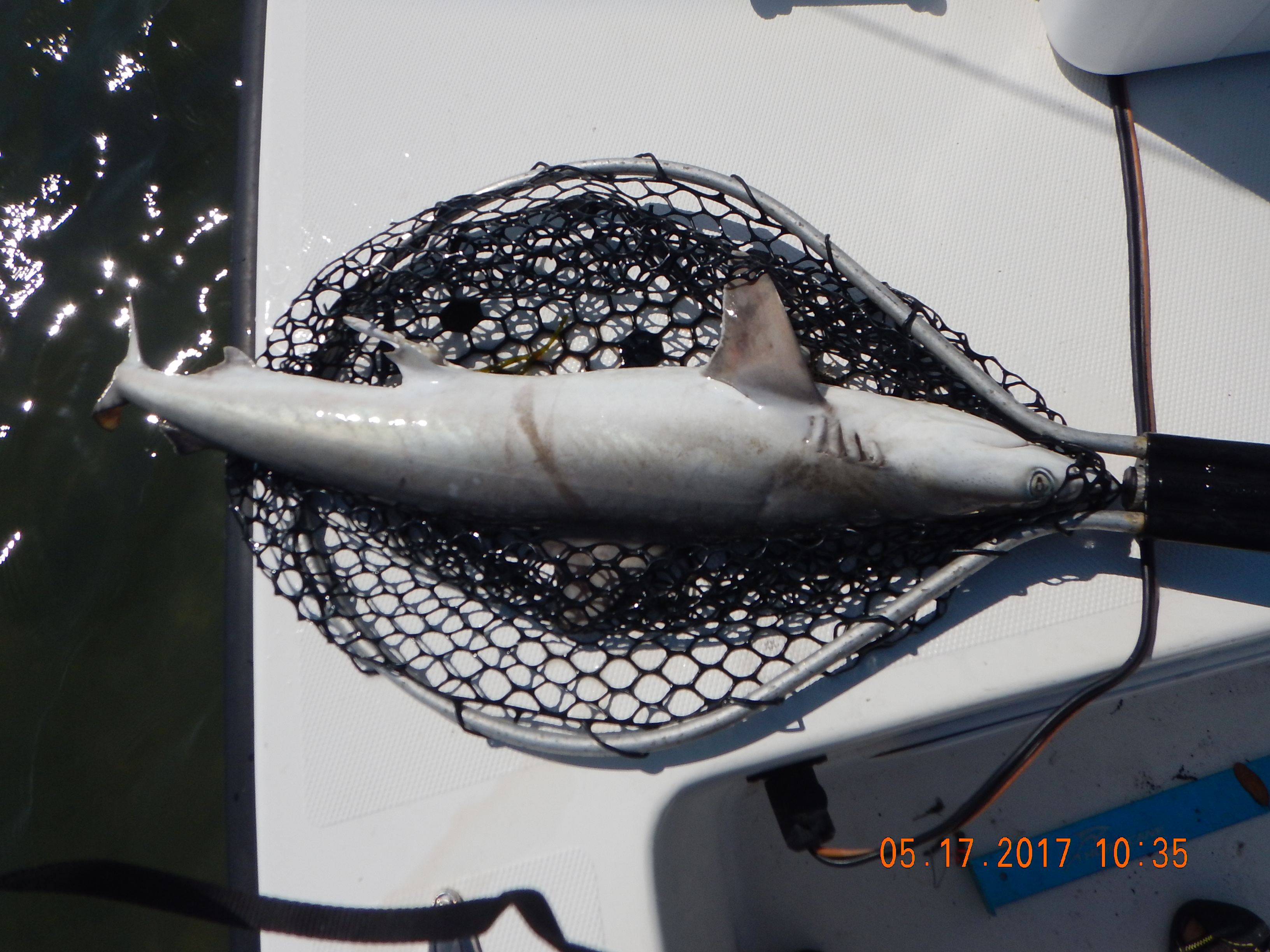
Ice cream man, do you think it would be better for all involved to stock Red Drum so there are plenty for everyone or to take seafood consumer's freedom to eat a fraction of what is killed for sport every year?
Ice cream man, do you think it would be better for all involved to stock Red Drum so there are plenty for everyone or to take seafood consumer's freedom to eat a fraction of what is killed for sport every year?
Again I say let the hatchery fish supply consumer demand. Take the nets out of the water. Supplementing natural stocks with hatchery raised fish will do nothing other than lower the price that commercial netters will get from a flooded market with both hatchery raised and natural stocks. Take the nets out let the netters retrain to own and run hatcheries.
I watch a man and his wife the other day keep 14 flounders that was between 8 to 13 inch explain how that's right and a nets are wrong.I've had the best year for flounder I've ever had rod and reel and nets same with the drum.
Ice cream man, do you think it would be better for all involved to stock Red Drum so there are plenty for everyone or to take seafood consumer's freedom to eat a fraction of what is killed for sport every year?
Again I say let the hatchery fish supply consumer demand. Take the nets out of the water. Supplementing natural stocks with hatchery raised fish will do nothing other than lower the price that commercial netters will get from a flooded market with both hatchery raised and natural stocks. Take the nets out let the netters retrain to own and run hatcheries.
There is a HUGE difference between hatcheries and open-water fish farms. Hatcheries stock fry to live free and self-sufficient until harvested by recreational or commercial fishermen while open-water fish farms confine as many fish as possible in small cages that are breeding grounds for disease and parasites that plague local fish. Stocking creates new revenue streams and a sustainable food supply that benefits everyone while open-water fish farms benefit a few multi-national corporations that require considerable subsidies and control of our public waters to turn a profit.
Being in fishery management and as a wildlife biologist, it pains me to see the solution for a lot of people today being "fish stocking." I am not disagreeing with the fact that fish stocking works to improve numbers and populations. HOWEVER I am disagreeing with the fact that stocking fish in an ocean environment is absolutely NOT a viable option. For those that cant see why stocking red drum, flounder or any species for that matter in the ocean will not work, let me run through some scenarios for you.
Scenario #1 freshwater fish example
Where are our trout going???? We need to start stocking this area!
This can be done, and quite successfully. Why?? There are no natural predators to feed on them. yes, you have some that get eaten by birds, some get eaten by crayfish and some eaten by other fish. in a trout stream environment however, once a trout gets to be 3-4" in length they are pretty much top of the food chain. This is why stocking trout can be done successfully.
Scenario #2 saltwater fish stocking
Where are our red drum going???? We need to start stocking!
Here is the problems with that.
Stocking fish as frye (fingerlings, hatchlings, minnows, etc):
#1) EVERYTHING and I do mean EVERYTHING in the ocean is out to get them. this last indefinitely. not like trout or bass etc, as to when they get to be a certain size they are safe. they will never be safe until they hit teenagers in weight and even then they still are not out of the safe zone. Lets say for instance it cost $2 per fish to raise into frye for release into the big pond. you have now spent $10,000 to raise 5,000 fish. of those 5,000 fish conservatively 500 of those fish will die within the first 24 to 48 hours just from environmental stress alone. now we have 4500. of that 4500, crabs, smaller, birds and other predators will take half before reaching 6-8" in length. now we are left with 2250 fish. of that 2250, half become victims of bigger predators, gill nets, trawlers, rec fisherman throat hooks etc. now we are left with 1125 that have made it to slot limit. these fish have survived it all now we can catch them! but wait...imagine going to a pond 10 acres big averaging 20 foot deep and throwing 1 fish in it to catch. this is essentially what your left with. 1125 fish in the ocean is like finding a needle in a haystack. your cost per fish also just went up to $9 each.
#2) stocking fish as "puppys" so to speak. The amount of food, manpower and electricity alone to get these fish to this size makes this an inviable option as well when you look at the cost to survival ratio. your talking about a migratory species, that schools. 1 trawler in the right place at the right time just took eliminated a school 0f 300 fish. examples could go on forever. Long story short, proper management of the species is what solves the problem. not stocking. stocking is never and will never be a FIX to the problem