

SWC Forums
Pull up a chair...let's talk fishing.

I am currently running a 10 micron FWS on my 1999 VP 5.0 GI (no longer injected now it is carbed). I changed the separator yesterday found a very small bit of dirt (rust looking) in the bottom of the jar. But the motor was not running right so I took off the fuel line to the carb. The screen was full of the same rusty looking crap. Cleaned it out and back to running fine.
Here is the question. The FWS on the motor is a very small capacity filter. I am going to install a second inline FWS upstream of the motor. It will be a high capacity 10 micron. Should I change the FWS on the motor to a 2 micron? Will it cause fuel starvation?

I would guess no, but why don't you replace the fuel lines or whatever component the rust is coming from? Eventually rust will turn into pinholes....
The fuel lines are new Problem is when I bought the boat a year and a half ago the boat was laid up for about 3 years I had the tanks drained. I only use non ethanol fuel. I believe what i am seeing is still dirt from the bottom of the tank. That's why I want to put on another inline filter. I will need to keep running and changing filters more often then every fifty hours. The problem came after running in a head sea. I think stuff at the tank bottom got sucked up. Attached are pictures of the fuel that came out of the FWS.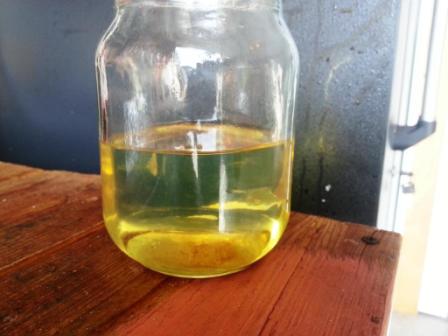
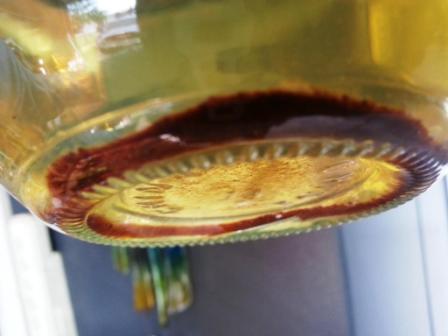
Two filters in line will not prevent problems, or down time, if one of them becomes contaminated enough. I would consider building a manifold, so that I could run filter A or B, and that way you could install a new filter element off shore by isolating the one that was contaminated.

If you believe the culprit lies in the tank I would have it drained, tested and cleaned thoroughly to get rid any particles that maybe in there. Hopefully the tank isnt bad and those arent rust particles from the tank meaning that it is being ate away slowly that one day you find yourself with a hole and loosing fuel.
Yeah Shipmate, that looks pretty bad. It's hard to stop rust once it's started, and like Werewolf said, last thing you want is gas in the people tank. I'm not familiar with Albemarle boats, but what kind of effort would it be to get the tank out of the boat?
Tanks do not seem to be to difficult to remove. They are 59 gallons each and are enclosed in a coffin box. Looks pretty easy to take off the top of the box (8 screws) and lift the tank out. The tanks are not subject to water from the bilge or anywhere else. I'm not to sure if it is actual rust or just the crap that has accumulated in the bottom of the tank. As I said when I bought it she was laid up for 3 years. The previous owner used ethanol. I had to take out the fuel tank senders and replace them because they were so gummed up the floats would not move, the stuff on them was this brown sticky stuff.
I hate to say it but I feel as if you may be better off replacing those tanks altogether. 3 years with ethanol gas sitting in a tank is probably done plenty of damage. Those filters aren't going to do but so much before you take the chance to ruin the engine.
I would at a min have the tanks drained and cleaned thoroughly and inspected well to make sure they are up to par. This should have been done to start with when you found the sending units in the shape they were. At the point the person says the tanks are ok then you may be good to go. But you may find out those tanks are on there way out.
You are correct as no water should be able to flow back to the tanks but there should be a bypass underneath that should allow any water to flow by and not sit near them.
Just poured off the fuel. What was left I put on to a paper towel, rubbed my finger over it and there was nothing left. It appears that it was "dirty fuel" there was nothing hard flaky or gritty. It just absorbed into the paper and left a color on it. Picture attached. What is on the the paper is what came from the filter. I hope that by putting in a remote filter and changing more frequently that will solve the problem. If not I will have the tanks inspected and cleaned or replaced.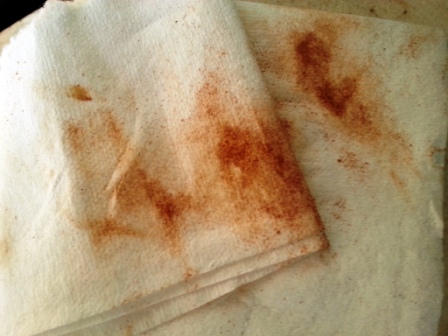
Just poured off the fuel. What was left I put on to a paper towel, rubbed my finger over it and there was nothing left. It appears that it was "dirty fuel" there was nothing hard flaky or gritty. It just absorbed into the paper and left a color on it. Picture attached. What is on the the paper is what came from the filter. I hope that by putting in a remote filter and changing more frequently that will solve the problem. If not I will have the tanks inspected and cleaned or replaced.
I think that color is rust particles, but a filter might do the trick. Good luck.
Go to the auto parts store. Buy a cheap diode style 12 fuel pump. Hook it up to the motor side of the FWS with a hose feeding into the fuel fill. Let it run for 4-6 hours. "Polishes" the fuel. Then change filters and fill with fresh 93 non-e.
A 2 micron filter is way too fine for a carbureted engine. It will only clog up with very small particles that will go through even the finest jets without causing any problems. Go with a high capacity spin on filter with a 10 to 20 micron rating. They are available at a reasonable price at most marinas and auto parts stores. The filter housings are also available almost everywhere.

Barry, if the tanks are readily accessible, you might think about pulling the cover and sending units. Should give you a good view of the tanks and what's in there. Much easier to siphon out the junk (if any) from that access. If it's been sitting up for 3 years after ethanol, I'd think about replacing the hoses from tank to engine unless a verified tank integrity problem exists. Aluminum tanks don't rust 'orange' ... :chin:
The fuel lines and the senders were changed. The stbd sender was so full of crap it would mot move. I am thinking that there is still stuff at the bottom. Putting the large capacity spin on with the drain tomorrow. I want to see if I can start seeing crap come out of the big one. Then I will see how much is in the small one. Hoping this works.
Check your fill hoses, cap to tank sometimes they deteriorate. They are steel corrugated and will rust. Thats about the only way rust could get in the fuel system