

SWC Forums
Pull up a chair...let's talk fishing.

This was run in a Canadian news outlet today:
Federal council approves red snapper ban in 5,000-square-mile area off Georgia, Florida
ORLANDO, Fla. (AP) - Fishermen will be prohibited from catching red snapper and some other snapper and grouper species in the southeast Atlantic in a nearly 5,000-square-mile zone off the coasts of Georgia and Florida under a measure passed by a federal fisheries management council Wednesday.
Members of the South Atlantic Fishery Management Council voted 9-4 in favor of the ban that supporters hope eventually will restore the red snapper's population over the next three decades.
Opponents, though, doubt studies showing that the population is overfished and said Florida fishermen already have been squeezed by restrictions in the Gulf of Mexico due to the BP PLC oil spill.
Wednesday's vote extends for an undetermined time an interim red snapper ban that was to expire in December.
Opponents said the council at least should have waited to pass the measure until December, when there will be a new red snapper population count. The new survey will help the council determine how long the new ban should last. The terms of the new ban also could be tweaked once the new population survey is released, a scenario that creates uncertainty for fisherman who are now planning how to adjust.
"It's hard to have a business plan and decide how you're going to work, how you're going to make your boat payments, how you're going to make your house payments when the rules keep changing," said Charles Phillips, a seafood wholesaler from Georgia who also is a council member. "It's hard on everybody."
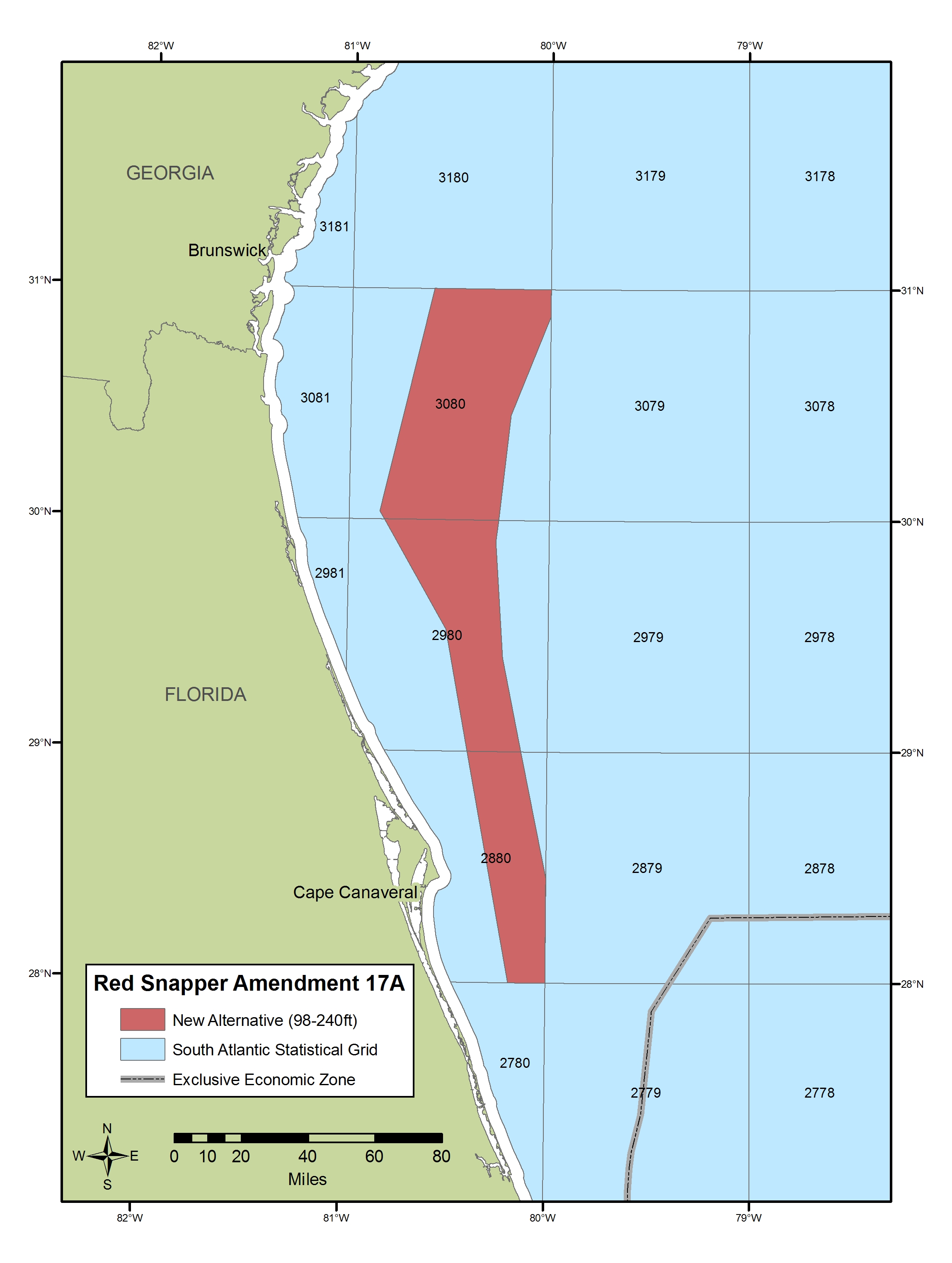
The ban prohibits fishing red snapper in an area of the Atlantic stretching from North Carolina to Florida. Fishing other snapper-grouper species also would be banned in depths of 98 to 240 feet in a nearly 5,000-square-mile zone of ocean stretching from an area in Georgia about 15 miles north of Fernandina Beach, Fla., down to around Melbourne, Fla.
Supporters of the ban said fishermen often catch red snapper accidentally in this area when fishing for the other species. Council members reduced the size of this zone by about 1,300-square-miles before the vote.
The ban will take effect later in the year after it is reviewed by the National Marine Fisheries Service and then U.S. Commerce Secretary Gary Locke.
Short-term hardships faced by fishermen will be offset by the health of the red snapper population, which will benefit fisherman down the road, supporters said.
"There's nothing that has had a larger impact on the fishing community than this," said Charles Duane Harris, the council's chairman. "People think we don't care but we do care. We care tremendously."

Short-term hardships faced by fishermen will be offset by the health of the red snapper population, which will benefit fisherman down the road, supporters said.
Oh, great, you won't be able to feed your family 'short-term', but if they live you'll see the benefits down the road. How do these people make it past puberty ... 🙁

Ok - I am a little slow. So no more bottom fishing from 98 ft to 240 ft?

Council Approves Measures to End Overfishing of Red Snapper
South Atlantic Fishery Management Council
News Release
June 9, 2010
Members of the South Atlantic Fishery Management Council approved an amendment to address overfishing of red snapper and rebuild the South Atlantic stock during its meeting in Orlando earlier today. Measures include a continuation of the closure of the red snapper fishery for both commercial and recreational fishermen in federal waters in the South Atlantic and a new area closure off of northeastern Florida and southern Georgia, where fishing for all snapper grouper species in water depths of 98 - 240 feet would be prohibited. Fishing for pelagic species such as tuna, dolphin, and billfish would be allowed within the area. Amendment 17A to the Snapper Grouper Fishery Management Plan was approved by the Council in a split vote (9 to 4) for submission to the Secretary of Commerce. The amendment will undergo further review by NOAA Fisheries Service before submission to the Secretary. The amendment is designed to meet the requirements of the reauthorized Magnuson-Stevens Act to end overfishing and rebuild stocks within a specified time period.
After reviewing public comment and the management alternatives, the Council modified the area closure for snapper grouper species, reducing the closed area by eliminating much of the previously proposed area off the coast of Georgia. The proposed closure encompasses federal waters where red snapper landings are highest. The area closure is designed to help eliminate release mortality for red snapper that occurs when fishermen target other co-occurring snapper grouper species.
If approved by the Secretary of Commerce, management measures in Amendment 17A will likely be implemented later this year. A new stock assessment is being conducted for red snapper in the South Atlantic and the results will be presented to the Council in December 2010. The Council will consider adjusting management measures following the stock assessment if warranted.
The Council will continue to meet this week in Orlando, Florida. Information about the meeting, including a link to a live video feed is available from the meeting information page. http://www.safmc.net/Meetings/CouncilMeetings/June7112010CouncilMeeting/tabid/644/Default.aspx
The South Atlantic Fishery Management Council, one of eight regional councils, conserves and manages fish stocks from three to 200 miles offshore of North Carolina, South Carolina, Georgia and east Florida.
_________________

Sounds like it, at least for SC, GA & FL, Which probably means more pressure on NC.
Can't fish in the Gulf. Can't fish in the Atlantic either.
Recreational and commercial fishermen were dealt a huge blow by federal fishery managers Wednesday as the South Atlantic Fishery Management Council recommended closing nearly 5,000 square miles of fishing grounds to all forms of bottom fishing. The vote took place in Orlando during the Council's quarterly meeting.
The measure was made necessary in order to protect red snapper from being targeted by anglers or being caught as bycatch by anglers fishing for other snapper grouper species. According to studies by federal fishery scientists, red snapper do not have a good release mortality and often die after being caught, reeled up from over 100 feet of depth, and then released.
The move was criticized by many who claim the closure will shut down party boat and charter boat businesses, and hurt other businesses that depend on recreational fishing in coastal economies, already on their last legs due to a lagging economy. They also maintain the red snapper fishing has never been better and has been getting better for the past decade or more.
Environmental groups praised the decision saying the move was the only way red snapper stocks could be rebuilt in South Atlantic waters. The vote was needed, they say, due to wording in the Magnuson-Stevens Act reauthorized in 2007, that states any fishery defined as overfished or experiencing overfishing must receive measures to stop it and rebuild the stocks.
Currently, the fishery is already under a moratorium for no harvest in all South Atlantic waters that was enacted January 4 and will continue until Dec. 5.
A new red snapper stock assessment should be finished in December, and the Council could then make adjustments to the long-term plan based on the results. It will take several months for the long term plan to take effect because it now must be reviewed by the National Marine Fisheries Service and the U.S. Secretary of Commerce.
“The South Atlantic Council deserves credit for taking a significant step toward putting red snapper on the road to recovery," said Holly Binns, manager of the Pew Environment Group’s Campaign to End Overfishing in the Southeast. "The red snapper fishing moratorium and closed ocean area are essential for a species that has plummeted to just 3 percent of healthy population levels and has been fished at unsustainable rates for more than 40 years.
“We understand this is a difficult time for some fishermen now, but this plan will help secure future fishing opportunities and a healthy ocean ecosystem that benefit tourism and all of our coastal communities.
“Our hope is that red snapper rebound rapidly and that sustainable fishing can resume when the species has made good progress towards full recovery.â€
The Environmental Defense Fund was not as accepting of the new rules as being the way to solve the red snapper problem. The organization backs the belief that catch share management is the best option for the commercial and for-hire (charter and party boats) sectors of the snapper and grouper fishery. Catch shares could potentially replace 17A’s closures with fishing seasons and reduce closed areas while fish populations rebuild. Private anglers deserve an opportunity to catch red snapper too, and fishermen and the Council have an opportunity to improve the management by exploring new tools like a tagging program.
The EDF stated in a press release that "Growing numbers of Southeast fishermen agree that catch shares are the best way forward."
Many anglers do not agree.
"Catch shares will be good for the big time commercial fishermen, but will hurt the part time commercial fisherman," said Robert Russell of Martin County.
Dave Heil of the Recreational Fishing Alliance based in Orlando blasted the vote.
"The SAFMC has ignored their sworn duty to follow the law and passed this unwarranted regulation," he said in an email Wednesday. "They based this regulation on SEDAR 15 which has been "thrown in the trash" and is being replaced by SEDAR 24 coming out this fall. It was totally irresponsible for the SAFMC to request this regulation when they clearly knew that it was based on bad science. Our calls for the council to wait until the new data was available fell on deaf ears."
Heil also said Governor Crist through his representative for the State of Florida on the council has voted to put thousands of Floridians working in the marine and fisheries industries out of work.
"It is irresponsible of Governor Crist to put so many Floridians out of work based on known bad information in the present economy." Heil said.
He said the Recreational Fishing Alliance will continue to fight this matter in the courts until "this baseless regulation is overturned."
From the http://www.tcpalm.com/news/2010/jun/09/red-snapper-ban-and-closure-approved-safmc/