

SWC Forums
Pull up a chair...let's talk fishing.

Now that October is here, it means the Old Drum run has started in some places and will
be starting any day now in others. So to the effect, I put this post together to help people have an idea of the needed equipment to ensure safe release of these fish, and some techniques for catching them.
First of all - Equipment. Old Drum are big and they are strong. 3000 spinning reels and 15 lb braid are not going to cut it. To ensure healthy releases, the fish need to be brought boat side as quickly as possible, netted, and put back in the water as quickly as possible.
NEVER HOLD OLD DRUM HANGING VERTICALLY. This can cause internal damage to the organs. If you want a picture, cradle the fish horizontally, making sure to support the underside.
Here is what I use:
Daiwa Saltist 5000 spinning reel with 65 pound braid on a 6 foot Crowder jigging rod
Avet SX with 40 pound braid on a Musky rod.
With these setups I can have one whipped in 5 minutes.

Now to the rig. This is known as a Lupton Rig and is very important to ensure the fish aren't gut hooked. I am covering bottom fishing here, the popping cork technique popular in the Pamlico Sound and Neuse River is very different. This method also works for fishing around pogy pods, with the weight lowered.
Here's what you need:
Heavy mono leader (100 pound in this case, but you can use from 80 to 130, whatever you have). Drum are not leader shy, so fluoro is not necessary.
Appropriate crimps
Egg weights appropriate for the current and depth you are fishing. I use 3 ounces 99% of the time
Plastic beads
8/0-10/0 INLINE circle hooks. The inline is very important to prevent gut hooks.
100+ pound swivels, These are 150.

Start with 18-24 inches of leader material. This will give you enough room above the weight to grab the leader without hurting your hand.
Snell your hook, with the running part entering to the inside of the hook eye

Thread on crimp, bead, sinker, bead, crimp, crimp in that order.

Make a loop and crimp your swivel on using the first crimp. If you've never used crimps, note that the ends flare when crimped correctly. This is important to prevent the end of the crimp from cutting into your leader.

Measure 3 inches from the hook eye and crimp the stopper crimp.

Slide bead, sinker, and bead tight to the stopper crimp and use the remaining crimp to hold them in place so they do not slide. Finished rig should look like this.

A few things. Snelling the hook is important as it give the hook a head start on the hinge action that catches in the corner of the fish's jaw. The distance of 3 inches from hook to weight creates drag on the hook that starts the hook moving to the corner of the jaw before it can be swallowed. These are important to prevent gut hooks and reduce release mortality.
Bait:
I like cut fresh menhaden. Sometimes whole ones or even whole live ones work better though, so experiment. Other baits that can be used include large finger mullet, spot heads (popular from piers), whiting heads (also popular from piers), pretty much any small pan fish will work. I chum by cutting menhaden into 1/2-3/4 inch wide chunks and tossing them out slowly but steadily, and my hook baits are menhaden with the tail cut off, approximately where the red line is

Fish with the rod in the rod holder, and set your drag at 1/3-1/2 line breaking strength. When you get a run, the hook will set itself, there is no need to set the hook like bass fishing.
Where - I'm not going to help you there. There are some well known spots that you should be able to find by asking around.
Remember, this is a catch and release fishery, so don't play around with them. Use stout enough tackle, a net, and take every care to release them in as good a condition as possible. If you do get a gut hooked one, cut it off below the weight.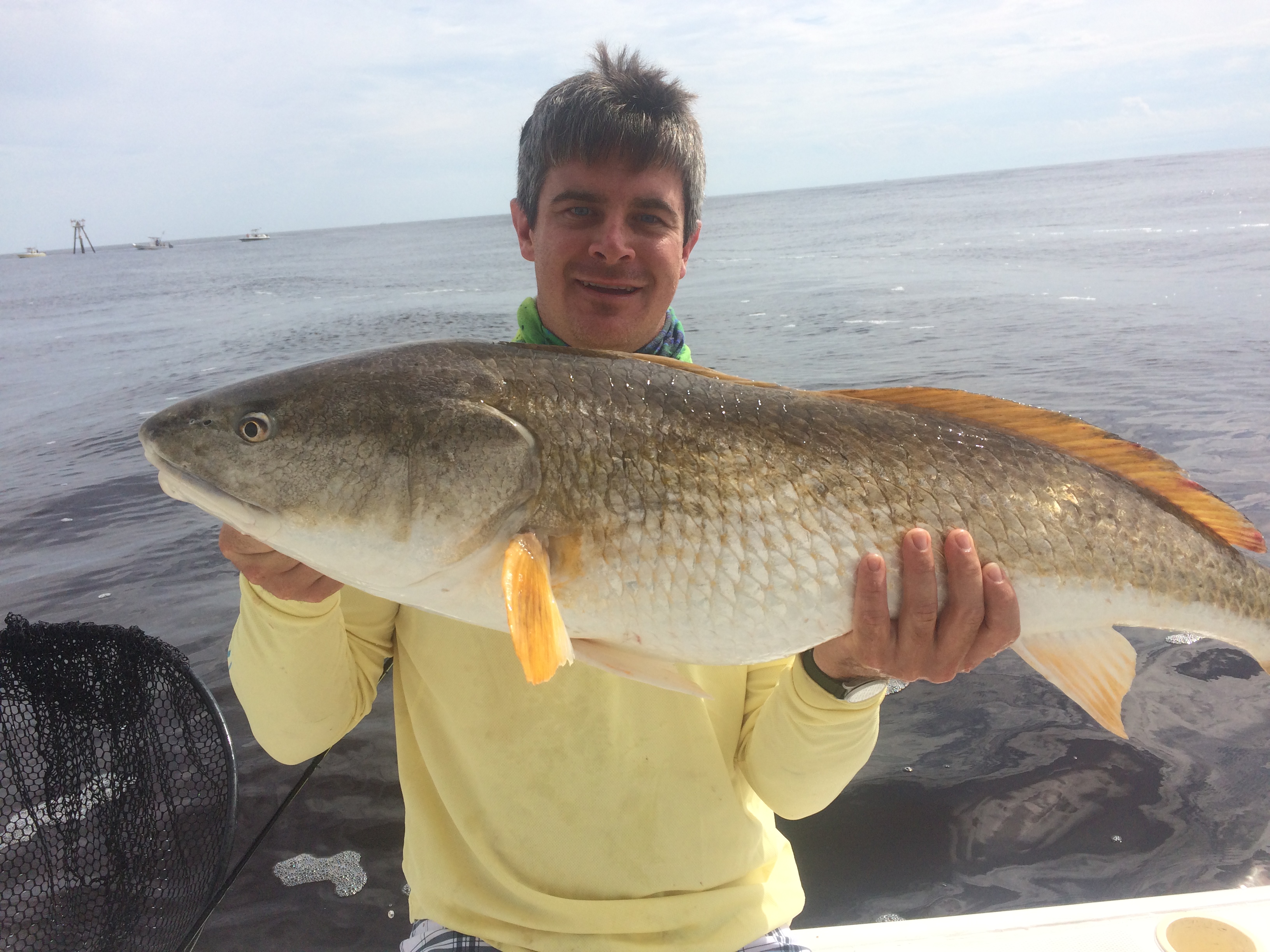

very good read and good info;; Thanks wavescrash

Nice post.
I may have missed it in your write-up on the release -- hold the fish boatside in the water & wait for her to swim off on her own. She will let you know when she's ready for you to let go. You can even give a slight push down as she goes. Don't just chunk them overboard as I have seen some do already this year!
Tip: while someone is reeling the fish in, someone grab the net & pliers, & have a camera ready. Locate a ruler beforehand too. This is so the fish can be netted, dehooked, pic, & released quickly (not laying on the deck while 2-3 ppl scramble around for pliers, then a camera, then a ruler, etc).
Very helpful post! As I have mentioned before I am new to the saltwater fishing and have yet to give the Reds a shot. Mainly because I DONT KNOW HOW lol I see where people fish for them just never gave them a shot. This really helps though!
Nice post.
I may have missed it in your write-up on the release -- hold the fish boatside in the water & wait for her to swim off on her own. She will let you know when she's ready for you to let go. You can even give a slight push down as she goes. Don't just chunk them overboard as I have seen some do already this year!
Tip: while someone is reeling the fish in, someone grab the net & pliers, & have a camera ready. Locate a ruler beforehand too. This is so the fish can be netted, dehooked, pic, & released quickly (not laying on the deck while 2-3 ppl scramble around for pliers, then a camera, then a ruler, etc).
Yeah I forgot that part, great addition!
A good pair of gloves is useful too. Often times you can reach over and grab the leader and weight or your shock leader and unhook them without even taking them out of the water. However if you have to do many you will wish you had a pair of gloves. Even using this method you will often times need to help them freshen up before releasing.
We may not see eye to eye on political views crash, but im glad you took the time to make this post. Very informative and well put together. I hope everyone takes this info and others info on the subject to still enjoy this great fishery and protect it at the same time

Thanks for sharing the knowledge, so that others can experience the thrill of the catch too one day...
Awesomb post thank you so much for sharing.

That was great information. Any chance I could get that in a format that I could share in email form to the fishing club I am partnered with?
"Stew"
GREAT INFO.
VERY DETAILED
THANKS
Thanks for info as I always did poping cork but will try doing some bottom fishing for them. Thanks!