

SWC Forums
Pull up a chair...let's talk fishing.

.. He said it had either a 305 or a 350.. They guy who has it is not the owner.. And it's all inboard as far as I know.. It's a schweet rig but I can't do anything like that right now.. Ya know how a boat'll get to ya sometimes.. 🙂 Way up front like that may get a bit bumpy, too..


Tunnel drives normally do not have a keel to protect the running gear.
Hit a submerged "something" and you could be in big trouble. Whether it be wrapping up a trap line on the prop or shaft or worse, hitting a submerged log and breaking the shaft.
On the flip side, they are faster than a full keeled inboard.

what about taking water? they can't be self bailing and the motor sits down low. Is that a problem with I/O'S ?
what about taking water? they can't be self bailing and the motor sits down low. Is that a problem with I/O'S ?
Why not?
Self baililng is a function of the deck height in relation to the water line
My boat is a straight inboard and is self bailing.
As far as the engine sitting low, that is what makes the ride so good. Center of gravity at the center of the boat at the water line, plus a keel for stability and you have almost no side to side rocking.
Inboards are different than IO's though. IOs have easier steering in reverse, but once you get used to shifting instead of steering backing an inboard is just as easy (but it does take some getting used to)
IOs are normally faster than straight inboards too.
Same basic engine just a difference of how the power gets to the prop. On an inboard it is a straight shaft through the bottom of the boat to prop. Steering via a rudder
On an IO the power source makes a 90 degree turn through the outdrive before getting to the prop.
There are pros and cons to both set ups actually all three if we throw OBs back into the mix..
Summary (my opinion):
OB Pros - FASTER, easy to swap out, most mid sized boats are OB built. New four strokes are much more efficient than OBs of just five or ten years ago
OB Cons - Somewhat expensive to maintain, especially the four strokes. If you are a do it yourself type person, parts can be quite expensive too. Extremely expensive to replace, again especially the four stroke. Having to "work around" the engines when working on a big fish
IO Pros - Faster than an inboard, comparable speed (to an extent) of an OB. Quiet. Engine ease of maintenance, most internal engine parts can be found at a local auto parts store (exceptions for starter, alternator, distributor and other marinized parts)
IO Cons- Rubber boot covers giant hole in transom. Outdrives had corrosion problems in the past but seem to be corrected. IOs usually have engine placement near the stern (Albemarle with Jackshafts are an example of a boat where this is NOT true) usually takes up a lot of fishing room. Outdrives require maintenance in addition to engine (no big deal though)
Straight inboard Pro - Ease of maintenance. Most parts are available at an auto parts store with the same caveats as above for ignition parts. You can carry spare parts so if you break down a lot of times you can make a repair and get back underway. Efficiency, I average 2.5 MPG at 22 knots. Location of engine right smack in the middle of the boat makes for a great ride. Cost of replacement is cheaper than either OB or IO (I can fully repower including labor for about $6000). No props hanging off the back of the boat ie.. clean transom
Straight inboard Con- Slower than IO or OB. Backing or moving in reverse takes some time to get used to (but once you do, it is cool to back into a slip without touching the wheel)
I am sure there are many points I missed, but this is what I thought of before my second cup of coffee today. I might have more to add later on.
Hope this helps.
I understand that there is probably a lip built around the engine well, but wouldn't is still be fairly easy to get the motor swamped? I guess I probably need to check one out up close before making assumptions. i have thought about getting an I/O instead of an outboard for the fuel economy as well as replacement cost, but have always been leary of having a motor sitting in the boat with water sloshing around ( I guess its no different that having the motor sitting in water with a boat sloshing around 😆 )

While I have had experience with a couple of I/Os I can't speak for every boat. However, most smaller craft I have seen have a hatch that covers the motor in the transom. The gap between that hatch and the floor has to seal to keep water from entering the bilge. Most I have seen don't even make a real attempt at sealing this. On Albemarles the engine is totally below the deck and the deck hatch is sealed well, so you can call that "self-bailing." The point is that the hatch that covers the engine has to have a good seal. If the integrity of this seal is compromised, you get water in the bilge.
You really do need to look at the design of the boat before making a decision. I wouldn't be scared of Albies, they have been putting IOs in boats for years (the horror story above might make me reconsider though). Some other boats I would be real worried about.
Good luck!
Jim,
While the engine is below a deck, the boat would have to be completely submerged for it to swamp.
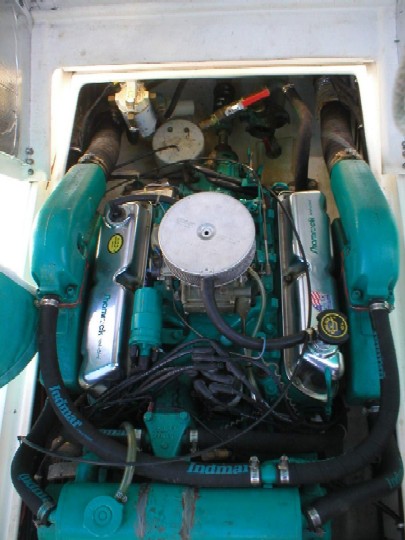
See if these pictures help. One is a shot of the engine, the other is a shot of the seating on my boat that sits atop the engine box.
While the engine is partially below deck, the engine itself is actually the same height as the waterline it is just covered by an engine box
Yes water does come onboard, but it drains overboard through the scuppers. Should a huge amount come aboard, it still can not swamp the engine unless the boat sinks since the engine actually sits above the water line.
Hope this helps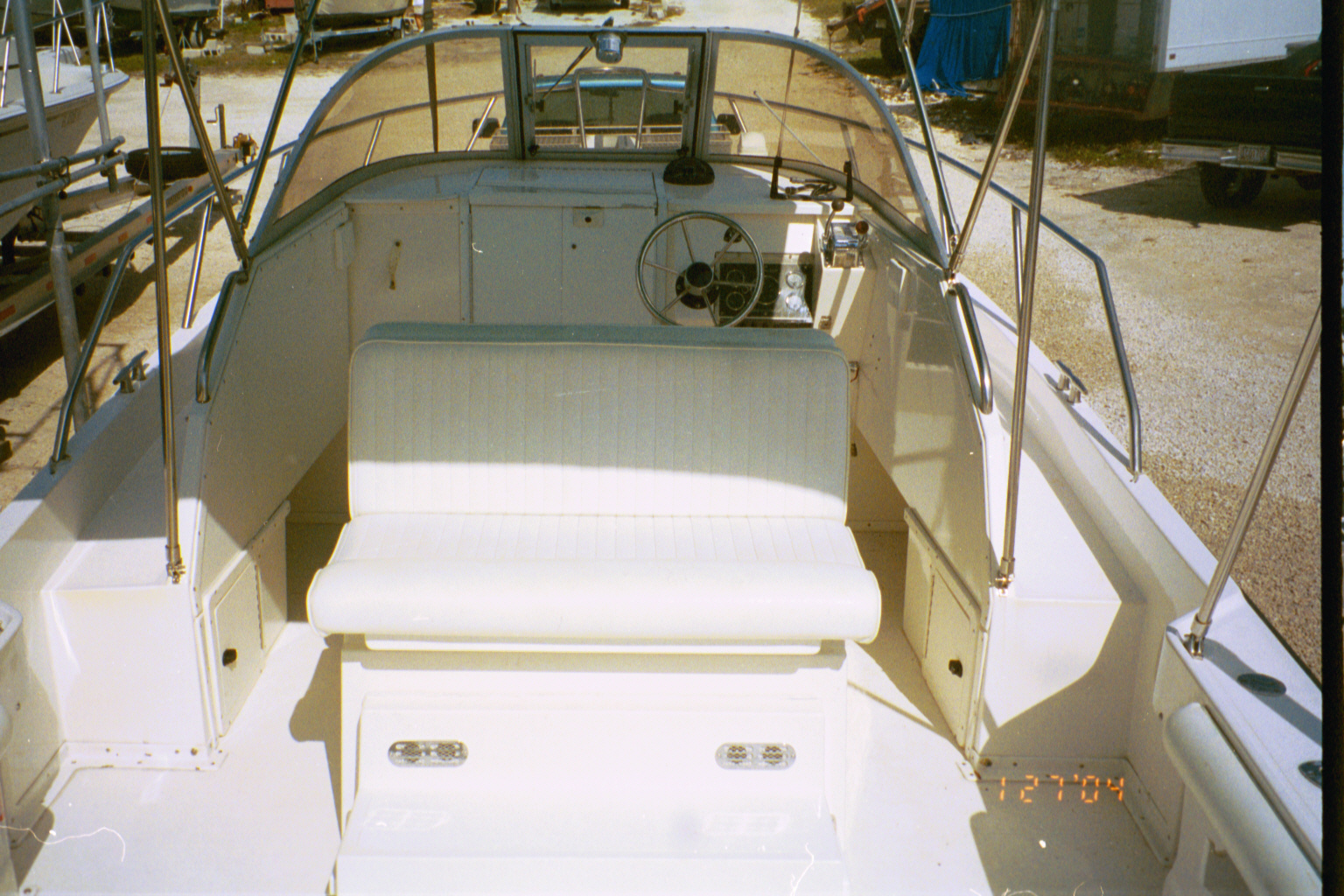
what kind of boat is that? pretty slick looking for a family
Hey Jim.. Here's a pic of the cockpit on that Kencraft as well.. d:^) Schneeky..

Just re-read some of this thread and missed a couple questions ..
HEY Timbo, enjoyed meeting you as well! Hope to see you at either the next meeting or at the Charlotte Offshore Fishing Club meeting on the 12th. Shoot me an email if you'd like more info on either club...
The boat pics I posted are a 22 Shamrock WA. LOA is actually closer to 24 but they call it a 22.
Anyway, I got it for its rough water handling and being kid friendly. With the back to back seats it has proven a great set up for keeping my kids where they are supposed to be.
I have had this boat for just over 4 years now and still love it. Wish it was faster, but no buyers remorse at all.